Digital Water Meter Guide: How They Work for Properties

A property manager usually notices water loss in the wrong place. The utility bill arrives higher than expected, a tenant disputes a charge, or maintenance discovers staining near a riser after water has been running unnoticed. By then, the building has already lost time, water, and operational control.
A digital water meter changes the sequence. Instead of waiting for a manual read or a monthly statement, the property team can work from frequent electronic readings, identify unusual flow, investigate the affected area, and connect verified consumption to billing. The technology doesn't eliminate plumbing failures, but it can shorten the distance between the first abnormal reading and a practical response.
For Canadian property managers, the important question isn't just whether a meter can transmit data. It's whether the data reaches the right person, fits the building's billing process, and produces a useful action. Toronto's AMI planning describes a system that combines meters, communications, and data management to support consumption visibility, leak detection, forecasting, and outage alerting. Toronto's AMI background material is a useful reference for understanding why metering is becoming an operational layer rather than a basic billing device.
Table of Contents
- When Digital Meters Reveal Hidden Water Loss
- How Digital Water Meters Actually Work
- Mechanical Versus Digital Metering Compared
- Key Specifications That Drive Deployment Decisions
- Deployment Considerations for Multi-Family Properties
- From Data Collection to Tenant Billing Workflows
- Why Digital Metering Is an Operational Upgrade
When Digital Meters Reveal Hidden Water Loss
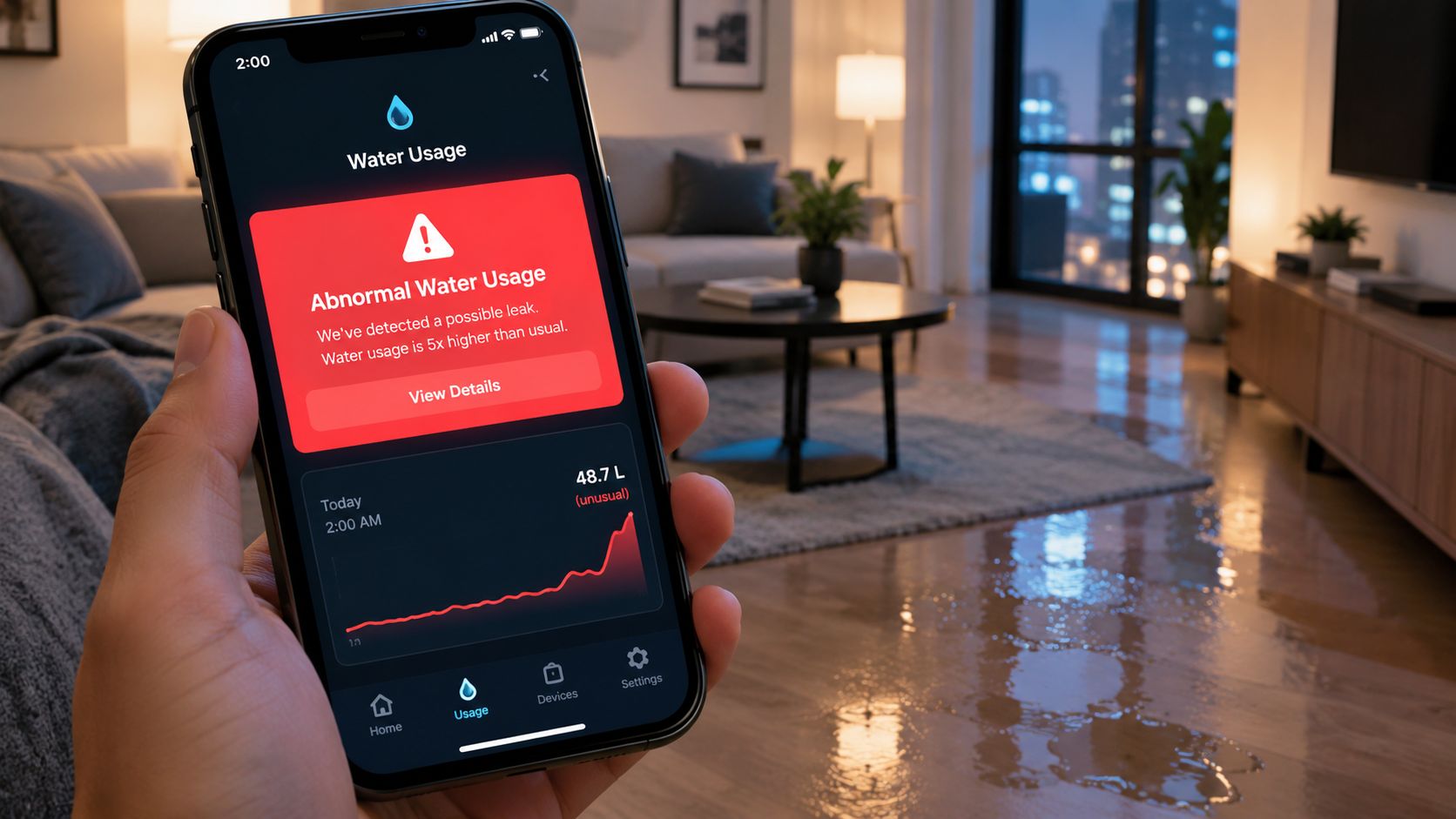
At 2 AM, a vacant suite shouldn't show a persistent flow pattern. A property manager who sees that pattern through a digital monitoring platform can ask maintenance to check the suite, the fixture group, or the nearby mechanical space before the next scheduled inspection. The value isn't the alert by itself. The value is the time gained to verify the cause while the problem is still manageable.
An analog meter generally provides a cumulative reading when someone visits the property. It can support billing, but it doesn't provide a continuous view of what happened between visits. Digital metering creates a more detailed record, so a property team can distinguish ordinary occupancy from continuous flow, overnight use, or an abrupt change in consumption.
The operational sequence matters
A useful leak workflow has four parts:
- Detect the pattern. The platform identifies flow that doesn't match the suite's normal profile.
- Validate the signal. Staff check occupancy, cleaning schedules, irrigation, mechanical equipment, and recent maintenance before escalating.
- Reach the right person. A resident, superintendent, plumber, or emergency contractor receives a clear request with the affected location and timing.
- Close the event. The team records the cause, repair, and post-repair flow so the alert becomes a documented maintenance outcome.
A digital meter won't tell you whether the source is a running toilet, a failed valve, or a concealed pipe. It can, however, show that the building's consumption warrants investigation. For owners who need a practical response path after an alert, a specialist such as plumbing services Total Plumbing Hot Water can provide a useful point of reference for leak-related plumbing support.
Practical rule: Treat an alert as a work order trigger, not as proof of a leak.
From monthly visibility to active monitoring
Hourly records can expose persistent overnight flow and help separate indoor demand from outdoor use. Research on Abbotsford, British Columbia, describes smart meters recording usage at the hourly level, supporting leak detection, forecasting, and the separation of outdoor and indoor consumption. The Canadian study on smart-meter data in Abbotsford shows why reading frequency matters operationally.
Property teams looking for a broader framework can also review this water leak detection system guide. The strongest programme connects the signal to a named responder, a documented escalation rule, and a confirmation step after the repair.
How Digital Water Meters Actually Work
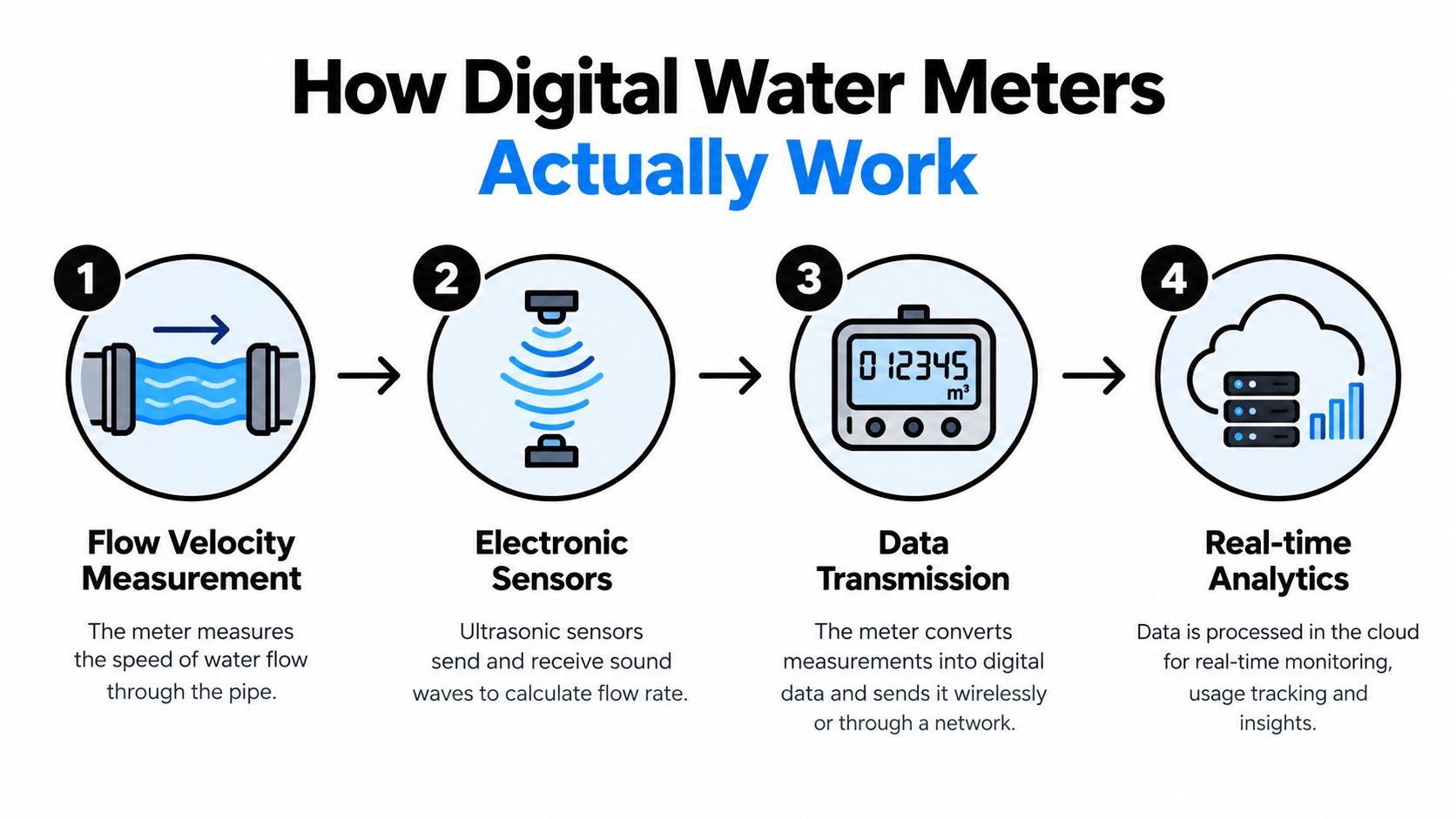
A digital meter has two jobs. It measures water moving through the service line, then communicates the resulting data to software that can store, analyse, and distribute it. The hardware may use electronic sensing technologies such as ultrasonic measurement, while the communications layer may rely on radio, cellular, or another network suited to the site.
The measurement method determines how the device observes flow. The communications method determines whether the reading arrives reliably from a basement, meter room, suite, or remote property. Those choices should be evaluated together because accurate measurement is of limited use if the building can't deliver consistent data to the platform.
The four layers of a working system
Measurement starts at the pipe. Sensors calculate flow and volume electronically rather than relying on a person to read a mechanical register.
Communications moves the reading away from the device. Depending on the design, the meter may send data to a nearby receiver, a gateway, or a cellular network. Signal strength, building materials, meter-room location, and network availability all affect the result.
Data management stores readings and associates them with a property, unit, common area, or account. This layer matters for billing because the system needs a reliable relationship between the physical meter and the correct customer record.
Analytics turns readings into operating information. A rule can compare current flow with a baseline, identify continuous use, or flag an unusual change for review. The algorithm is only as useful as the data quality and the response process behind it.
Why read frequency changes the decision
Halton Region's wireless AMI rollout is designed to send encrypted water-usage data six times per day, with each transmission taking less than one second, according to the region's water-meter information. Halton also says the system removes the need for physical meter visits and gives customers remote access to readings, bills, payments, and water-use data.
That example also illustrates a design issue that property managers shouldn't ignore. Halton says its transmitted data is encrypted and doesn't include personal information, so privacy and cybersecurity need to be considered during procurement, not added after installation.
For a practical explanation of remote-reading architecture, see this guide to water meters with remote reading. A platform that receives readings but doesn't integrate them with alerts, account records, or maintenance workflows leaves much of the operational value unused.
Mechanical Versus Digital Metering Compared
The choice between mechanical and digital metering isn't just a hardware comparison. It affects how often a team can observe consumption, how much staff time goes into reading meters, how quickly a leak becomes visible, and how confidently the billing team can explain a charge.
Mechanical meters remain familiar and can be appropriate where the property needs a simple cumulative register and has limited monitoring requirements. Their weakness appears between reads. A building may have a meaningful change in consumption without anyone seeing when it began or which pattern caused it.
Digital meters add communications and data handling to the measurement task. Winnipeg's planned programme illustrates the scale of that transition. The city plans to replace 221,000 analog water meters, with an estimated project cost of $135 million and an expected project duration of five years once it starts, according to CBC's reporting on Winnipeg's smart-meter programme. The same report says the new meters will transmit encrypted usage data, improve accuracy compared with older analog meters, and detect leaks more quickly.
Decision matrix
Feature
Mechanical Meter
Digital Meter
Reading method
Usually requires a person or local equipment to read the register
Sends electronic readings to a remote platform
Visibility between reads
Limited to the information captured during scheduled reads
Supports frequent readings and pattern analysis
Leak response
Often depends on a bill change, inspection, or visible damage
Can flag continuous or abnormal consumption for investigation
Billing workflow
More exposure to manual entry and estimated reads
Can feed automated records into billing and reporting systems
Communication
No inherent network connection in the basic device
Requires a communications path, gateway, or network service
Site complexity
Familiar installation model, but physical access remains important
Requires planning for signal coverage, data ownership, and commissioning
Maintenance risk
Mechanical wear and reading access remain practical concerns
Electronics, battery condition, connectivity, and platform support require review
Where each option fits
A digital meter works best when the operator will act on the information. If no one reviews alerts, no one owns leak escalation, and the billing platform can't accept the readings, the additional technology may create cost without changing behaviour.
Mechanical equipment can still serve a low-complexity site, but it won't provide the same evidence for diagnosing when consumption changed. For a multi-family property, the more useful question is whether the building needs a passive record or an active monitoring system. That answer should include the cost of manual reads, disputed charges, emergency response, and water damage, not only the purchase price.
Key Specifications That Drive Deployment Decisions
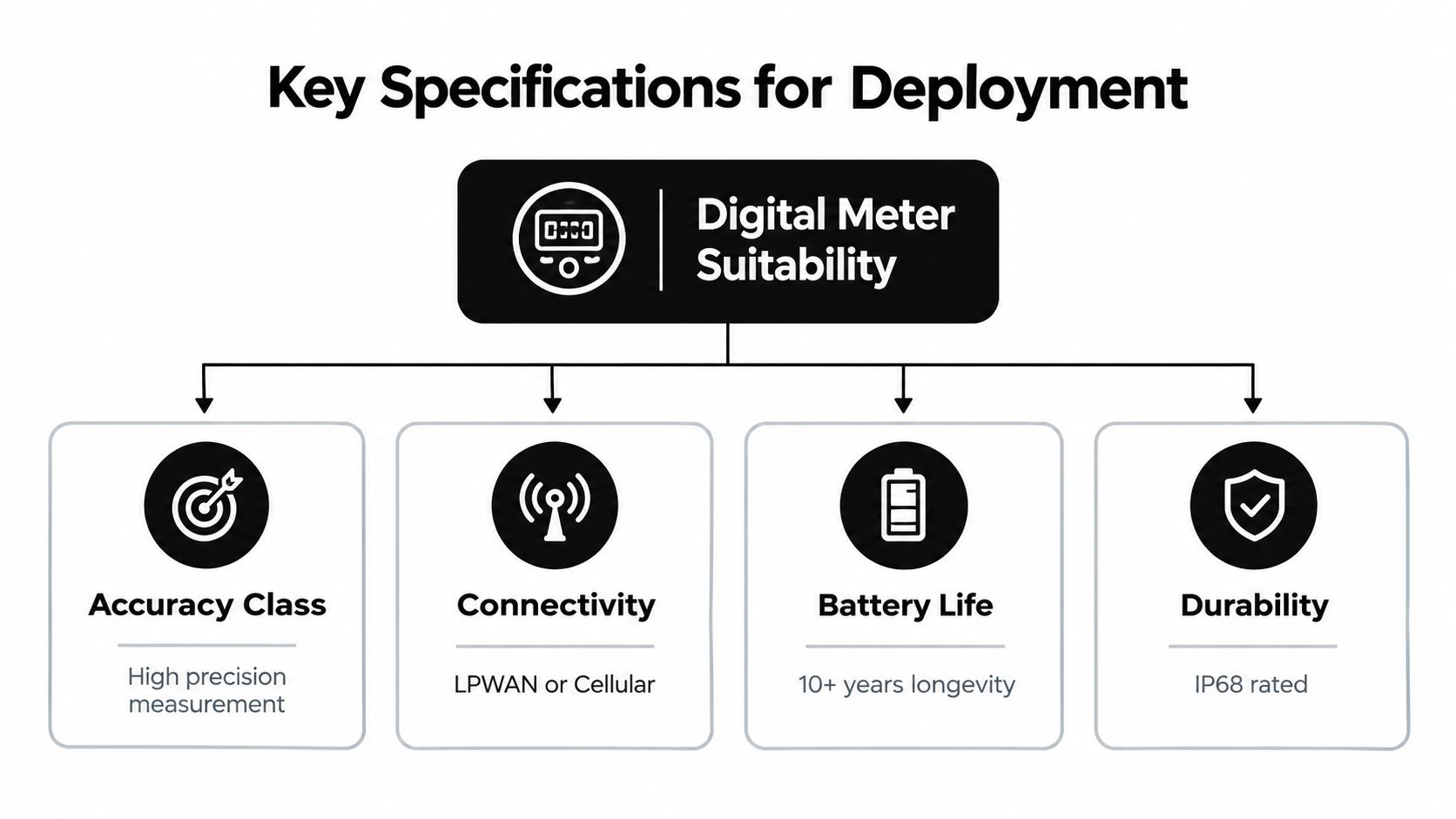
A meter specification sheet can look impressive while hiding the decisions that determine whether the installation works. Property managers should evaluate accuracy, connectivity, battery design, and physical durability as a connected operating system. A device that performs well in a test environment may struggle in a concrete high-rise if its communications path wasn't designed for the meter location.
Accuracy supports defensible billing
The meter should meet the applicable revenue-measurement requirements for the jurisdiction and use case. In Canada, that means asking how the equipment aligns with Measurement Canada expectations where the readings support charges to occupants. Accuracy also needs to be considered across the flow range, because low continuous flow can be operationally important even when total demand appears modest.
A meter that records more detail isn't automatically more useful. The owner needs a clear calibration, commissioning, and replacement process, plus a record showing which device serves which unit or area.
Connectivity determines whether data arrives
The signal path needs a site survey. Concrete, metal cabinets, underground rooms, and dense riser arrangements can affect radio performance, while cellular designs depend on coverage and service continuity. Ask where the gateway will sit, how failed transmissions are handled, and who investigates a silent meter.
Procurement test: Ask the supplier to explain the recovery process for missing data, not only the normal transmission process.
Battery and durability shape lifecycle work
Battery life is a design consideration for devices installed in locations that are difficult or disruptive to access. The useful question isn't a generic longevity promise. Ask how transmission frequency, temperature, signal quality, and alert activity affect the expected service life.
Durability matters just as much. Meter rooms can be damp, exposed to condensation, or vulnerable to accidental contact during maintenance. Confirm the enclosure rating, installation orientation, service clearances, and protection against foreseeable site conditions.
Integration is the specification owners feel most
The platform should map each meter to a property record, unit, tenant account, and billing period without forcing staff to rebuild the same information manually. It should also retain an audit trail for corrections, estimated values, device changes, and tenant questions.
Toronto's AMI architecture includes a communications network and a data management platform alongside the physical meters. The Toronto AMI material describes near-real-time consumption plus parameters such as temperature and pressure, with applications that include billing accuracy, leak detection, demand forecasting, and outage alerting. For property managers, that makes integration a financial control, not just an information-technology preference.
Deployment Considerations for Multi-Family Properties
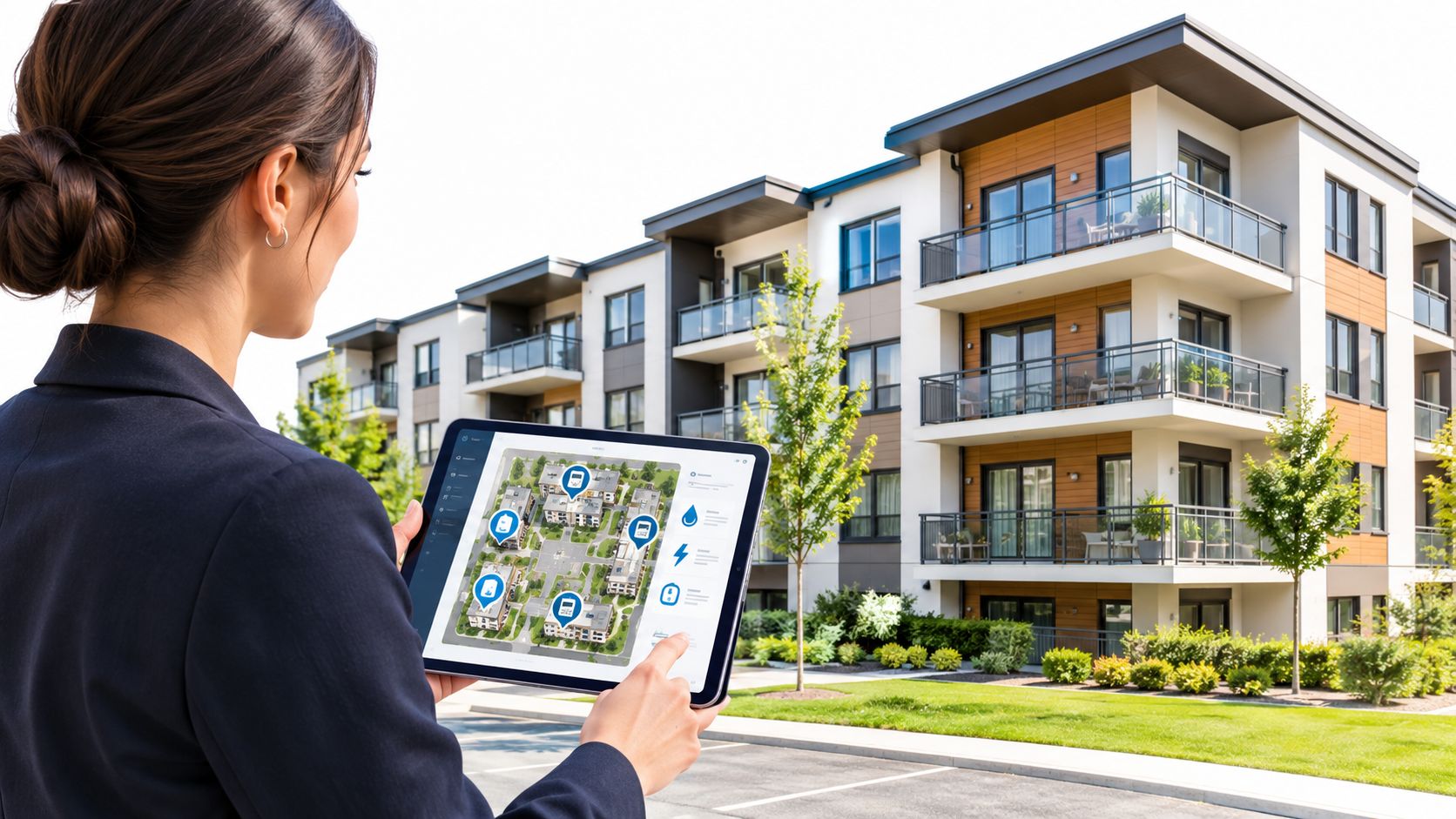
A successful deployment begins with the building, not the catalogue. Before selecting equipment, map the incoming service, suite branches, common-area fixtures, mechanical rooms, meter locations, access constraints, and existing billing responsibilities. The same meter strategy won't suit a low-rise rental property, a condominium with difficult risers, and a mixed-use building with commercial tenants.
Start with a deployment readiness check
Define the measured boundary. Decide whether the project covers individual suites, common areas, commercial spaces, or only selected zones. A clear boundary prevents billing disputes later.
Confirm jurisdictional rules. Requirements for submeters, tenant billing, privacy, approvals, and device certification vary across provinces and states. Ontario projects may involve regulated unit-submetering considerations, so legal and compliance review belongs in the project plan.
Inspect physical access. Identify whether technicians can reach every meter without entering occupied suites, removing finished surfaces, or interrupting service for an unreasonable period. Record valve condition and pipe configuration before the installation date.
Test communications. Verify the planned network in basements, meter closets, concrete shafts, and upper floors. A connectivity assumption made from outside the building isn't a substitute for an on-site test.
Assign operational ownership. Name the person who receives alerts, the person who contacts residents, and the person who closes the maintenance record. If these roles are unclear, the system may produce notifications without reducing risk.
Prepare customer communications. Residents should understand what is being measured, how charges are calculated, how unusual usage is handled, and who can answer questions. Clear notices reduce avoidable access problems and billing friction.
Plan the project around commissioning
Commissioning should confirm the meter identity, location, direction of flow, unit association, initial reading, communications status, and billing record. The team should test an end-to-end event, from a meter reading through the platform to the management workflow, before the project is considered live.
Installation logistics also matter. Coordinate with the superintendent, plumbers, electricians, residents, and billing administrator. If the building needs urgent plumbing support outside normal management hours, an answering service such as plumbing answering service may be relevant to the broader response plan, although it doesn't replace a defined leak-escalation procedure.
Commissioning principle: Never treat a successful hardware installation as proof that the billing and alerting system is ready.
From Data Collection to Tenant Billing Workflows
The most useful deployment looks uneventful to the billing team. A meter sends a reading, the platform validates it, the account mapping identifies the correct suite, and the billing workflow applies the approved rules. Staff investigate exceptions rather than typing routine readings into spreadsheets.
Consider a building where a resident asks why a water charge changed. The billing coordinator can review the meter record for the relevant period, check whether the reading was actual or estimated, and compare the result with the unit's usage pattern. If the system flags continuous flow, the property team can open a maintenance task separately from the billing conversation. That separation matters because a tenant's charge question and a plumbing fault may be related, but they require different actions.
A workable data path
- Capture. The meter records consumption and sends it through the communications network.
- Validate. The platform checks for missing intervals, duplicate records, device changes, and values that require review.
- Associate. The reading is linked to the correct unit, common area, or commercial account.
- Calculate. The billing system applies the approved allocation and account rules.
- Communicate. The resident receives a clear statement, while management retains the supporting record.
- Escalate. Anomalies create a maintenance or leak-review task rather than waiting for the next invoice.
The guide to billing tenants for utilities covers the administrative side of connecting measured consumption to resident charges. The practical test is whether staff can answer three questions without reconstructing the process manually: what did the meter record, which account did it belong to, and what action followed an abnormal reading?
Savings come from decisions, not dashboards
A dashboard alone doesn't reduce consumption. Savings can emerge when a team responds to a continuous-flow alert, corrects an estimated-read process, identifies a common-area fixture that runs outside expected hours, or gives a resident usable feedback about their consumption.
Ontario's electricity ecosystem demonstrates the importance of data operations at scale. The Ontario Energy Board says the provincial repository processes reads from over 5.3 million smart meters and receives more than 125 million new records per day in its Quarterly Smart Metering Entity and MDM/R Report. Water programmes may be less mature, but the lesson is applicable: data governance, account mapping, exception handling, and system ownership need attention before read frequency increases.
Why Digital Metering Is an Operational Upgrade
A digital water meter becomes an operational upgrade when the property team uses its readings to change what happens next. The device can support accurate billing, but its stronger contribution is earlier awareness of abnormal consumption, clearer investigation records, and better coordination between management, residents, maintenance, and contractors.
That distinction is important because Canadian water AMI adoption remains uneven. A market estimate cited in the supplied research places Canada's AMI water-meter adoption below 20% of total water connections as of 2026, while the same broader context shows that electricity smart metering is already operating at a much larger data scale. The implication is practical, not speculative: many property owners are no longer asking whether remote reads exist. They're asking how water data will work with their existing systems, responsibilities, and leak response.
For a multi-family operator, the business case should therefore include more than meter replacement. Assess the cost of manual access, billing exceptions, delayed leak discovery, emergency remediation, tenant disputes, and unallocated common-area consumption. Then define the actions the platform must trigger and the evidence staff must retain.
A provider such as Axis Meter Solutions can combine water submeters, communications, leak and flood detection, billing workflows, commissioning, and ongoing service for multi-family, condominium, mixed-use, and commercial properties. The right fit still depends on the building survey, jurisdictional requirements, integration plan, and the owner's willingness to assign responsibility for alerts.
Ask Axis Meter Solutions to assess your building's meter layout, communications requirements, billing workflow, and leak-response process before you commit to a digital water meter programme. Visit Axis Meter Solutions to discuss a practical submetering design for your property or portfolio.
Ready to Optimize Your Utility Management?
Tell us about the property, utility, number of units, and your billing or monitoring goals. We'll help you identify the right next step.
Book a Call