8 Flood Prevention Strategies for Multifamily Buildings
The call comes on a Tuesday morning. A fourth-floor tenant says water is coming through the ceiling of the suite below, and the second-floor resident is already filming the stain. A supply line failed behind a wall overnight. Nobody on the night desk knew. By the time the superintendent finds the shutoff, the hallway carpet is soaked and the ceiling underneath is open.
Most multifamily flood losses don't begin with a single dramatic storm. They begin with a small failure that goes unnoticed, then encounter a sewer surge or groundwater the building was never designed to handle. Flood prevention is effective when you match the solution to the path the water takes, rather than buying the same kit for every property.
The eight strategies below are grouped that way. Water from overhead and inside the building. Water pushed back from the municipal sewer. Water from the ground. Surface flooding from outside. Then the building's own systems and the plan that has to run when hardware isn't enough. The aim is layered protection. Detect early, stop the supply, keep water out of lower levels, and know what to do in the hour those layers fail. That includes documenting basement water damage for insurers while the loss is still fresh, not after the drywall is already in a bin.
Table of Contents
- 1. Smart Water Leak and Flood Detection Sensors
- 2. Automatic Water Shut-Off Valves
- 3. Backwater Valves and Sewer Backflow Prevention
- 4. Sump Pumps and Battery Backup Systems
- 5. Elevating and Protecting Critical Building Systems
- 6. Dry Floodproofing with Barriers and Sealing
- 7. Green Stormwater Infrastructure
- 8. Flood Risk Planning, Emergency Response, and Resilient Design Standards
- How the eight flood prevention strategies compare
- Building a Flood Prevention Plan You Can Actually Run
1. Smart Water Leak and Flood Detection Sensors
This layer is for water that starts inside the suite. A cracked supply line, a stuck toilet fill valve, a water heater, a washing machine hose.
A 2025 Public Safety Canada survey of 2,870 Canadians found that 84% of people who had taken preventive action spent CAD 2,000 or less, including 58% who spent CAD 500 or less. Point sensors sit in that same low-cost band, and they catch failures that gutters and grading never see.
Where the sensor has to sit
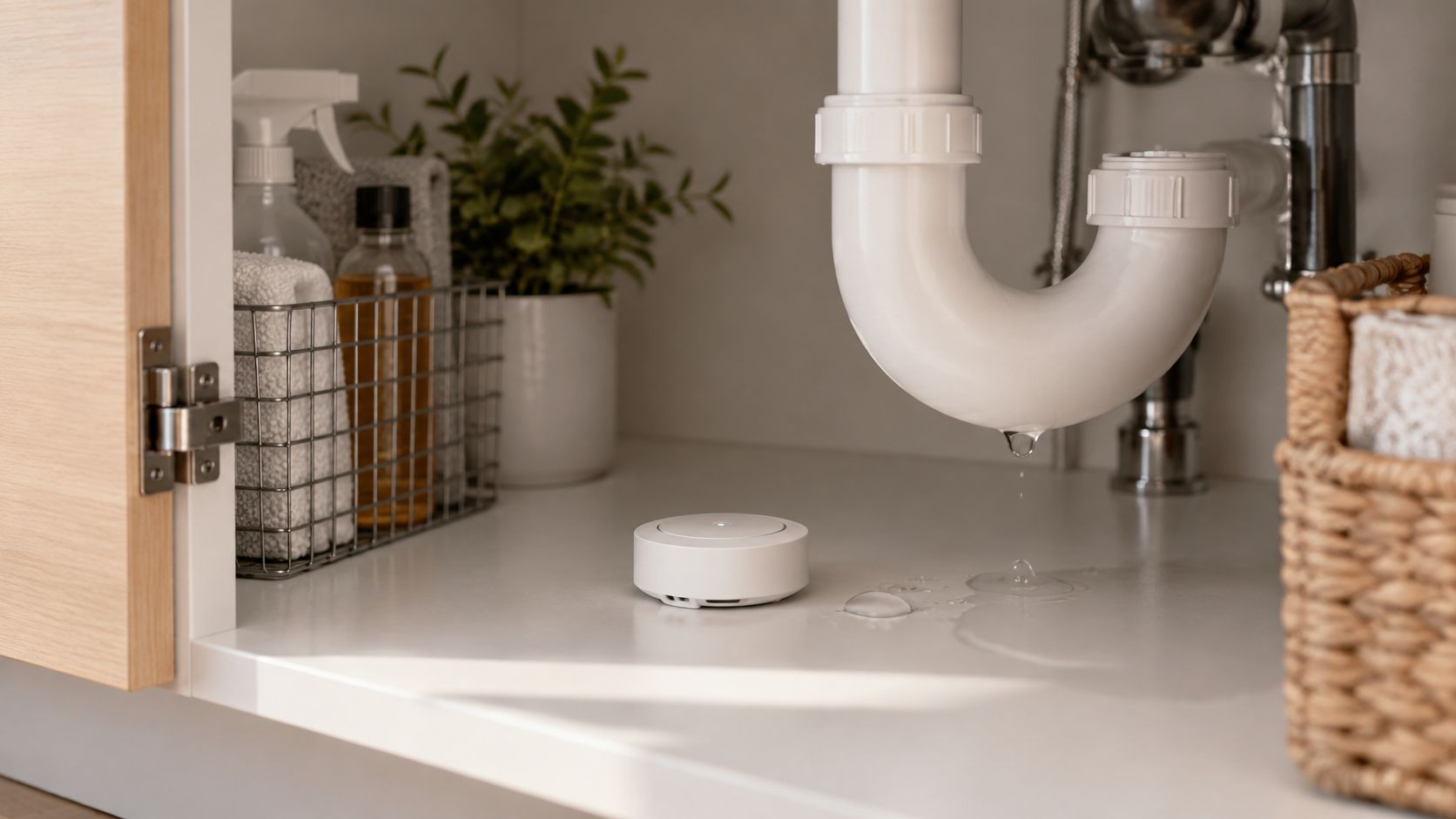
Put one at the lowest point of each suite, under the kitchen sink, behind the toilet, beneath the water heater, and under the dishwasher and laundry machine. In the common areas, cover the mechanical room, the domestic riser, and the laundry-room floor. A water alarm sensor only helps if a named person answers it.
Say a parkade laundry stack leaks at 2 a.m. The puck wets, the alert hits the on-call superintendent and the property manager, and the branch valve is closed before the ceiling below opens up.
- Name the recipients. Superintendent first, manager second, a monitoring centre if you pay for one.
- Set a response time. Acknowledgement inside 15 minutes after hours, not when someone next checks email.
- Test on a schedule. Wet-test at install, then every six months, and swap batteries before a low-battery chirp is the only signal left.
- Pair sensors with unit meters. Continuous flow shows that water is moving. The sensor shows where it landed.
The same survey found 66% of homeowners regularly clear window wells and drains. That site work matters, and it still won't tell you a fourth-floor line failed. Don't stop at one gadget and call the building protected.
2. Automatic Water Shut-Off Valves
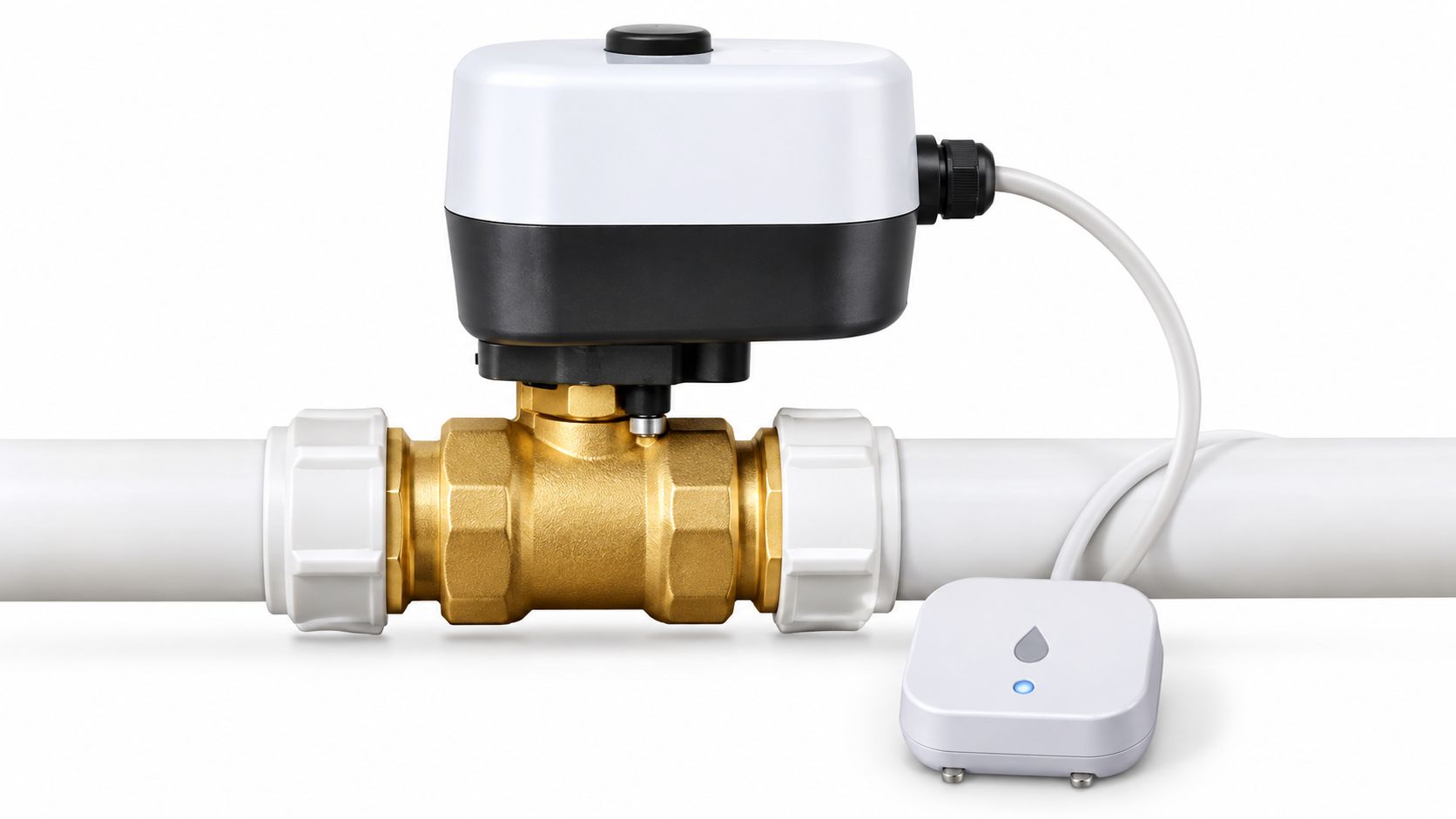
A sensor reports the water. A motorized valve stops it.
Fit the valve downstream of the main meter and upstream of the floor branches, or put one on each floor where a single closure would knock out the whole building. Purpose-built rentals and condominiums already do both. Vacant and seasonal units are the clearest case, because nobody is home to hear the spray.
What actually fails
A valve that isn't exercised seizes. A valve with no battery dies in the same outage that floods the mechanical room. A closure with no tenant notice turns into a stack of angry calls, and sometimes a bypass someone reopens without telling you.
Practical rule: Test the valve at least twice a year, write down the result, and confirm it went fully closed, not just that the motor hummed.
Specify battery backup or a fail-safe that matches the risk. Fail-closed protects a vacant wing. Fail-open can be the right call on a line that also feeds fire protection. Don't guess. Settle that with the plumber and the fire protection designer before you order.
An electric ball valve is the hardware. The operating piece is the notice: who tells residents, how long the water stays off, and who is allowed to restore it.
Say the third-floor hot line splits at 11 p.m. Flow monitoring sees continuous use with no fixtures open, the valve closes, and the night manager gets the alert plus a short script for that riser. You lose a night of hot water on one floor. You don't lose three ceilings.
3. Backwater Valves and Sewer Backflow Prevention
This is the municipal sewer path. When a combined or storm sewer surcharges, sewage doesn't stay in the street. It comes up the building drain, through floor drains, and into the lowest suites and the parkade.
A national survey of Canadian property owners, published in the International Journal of Disaster Risk Science, found that only 39% reported installing a backwater valve. The same study estimates that property-level protection can offset as much as 80% of household flood damage, while 48% of respondents were willing to pay less than CAD 500.
That's the trade-off on older city blocks. The valve costs less than one sewer backup, and it still gets skipped because access is ugly, the permit feels slow, and the last flood was treated as a one-off.
Keep the valve working
- Inspect annually and after major rain. Sediment and wipes are what leave a check valve stuck open.
- Confirm the code path first. Permit, inspection, and whether the valve belongs on the building drain or a branch.
- Label it and keep the cover clear. A valve under stored furniture will not get serviced.
- Don't rely on it when the water table is high. If gravity can't leave the building, you still need a pump.
Municipalities in Canada and the United States have paid rebates on streets with repeat basement flooding. Take the rebate, then put the cleaning date on the same calendar as the fire-alarm test.
Say a July cloudburst loads the combined sewer. Without the valve, the parkade drain burps sewage into the elevator pit. With a clear backwater valve, the surge stops at the device. Staff still need the sump, because the valve keeps outside sewage out and does nothing for water already inside.
4. Sump Pumps and Battery Backup Systems
Groundwater and wall seepage don't care that the sewer valve held. A basin at the low point collects that water, and a pump sends it outside, well clear of the foundation.
Older multifamily buildings usually add this after the second basement flood, not before. Condominium corporations that treat the pump as reserve-fund equipment, with a monitoring contract, are the ones that still have a dry electrical room in November.
The U.S. Bureau of Reclamation reports that the Central Valley Project prevented more than $5 billion in flood damage between 1950 and 1991. Public works move the big water. Your pump is the last metre, and the storm often kills the power at the same time.
The test that matters
Pour water into the basin at least twice a year and watch the pump start, discharge, and stop. A float that clicks in your hand can still hang up in a dirty pit.
Replace the backup battery on the manufacturer's interval, commonly every three to five years, not when it dies during the storm. Read how long backup batteries run before you assume an overnight outage is covered. Size the pump and basin to local rainfall and groundwater, with an engineer if that parkade has flooded before.
A high-water alarm that only rings in an empty mechanical room is a decoration. Send it to a phone someone answers.
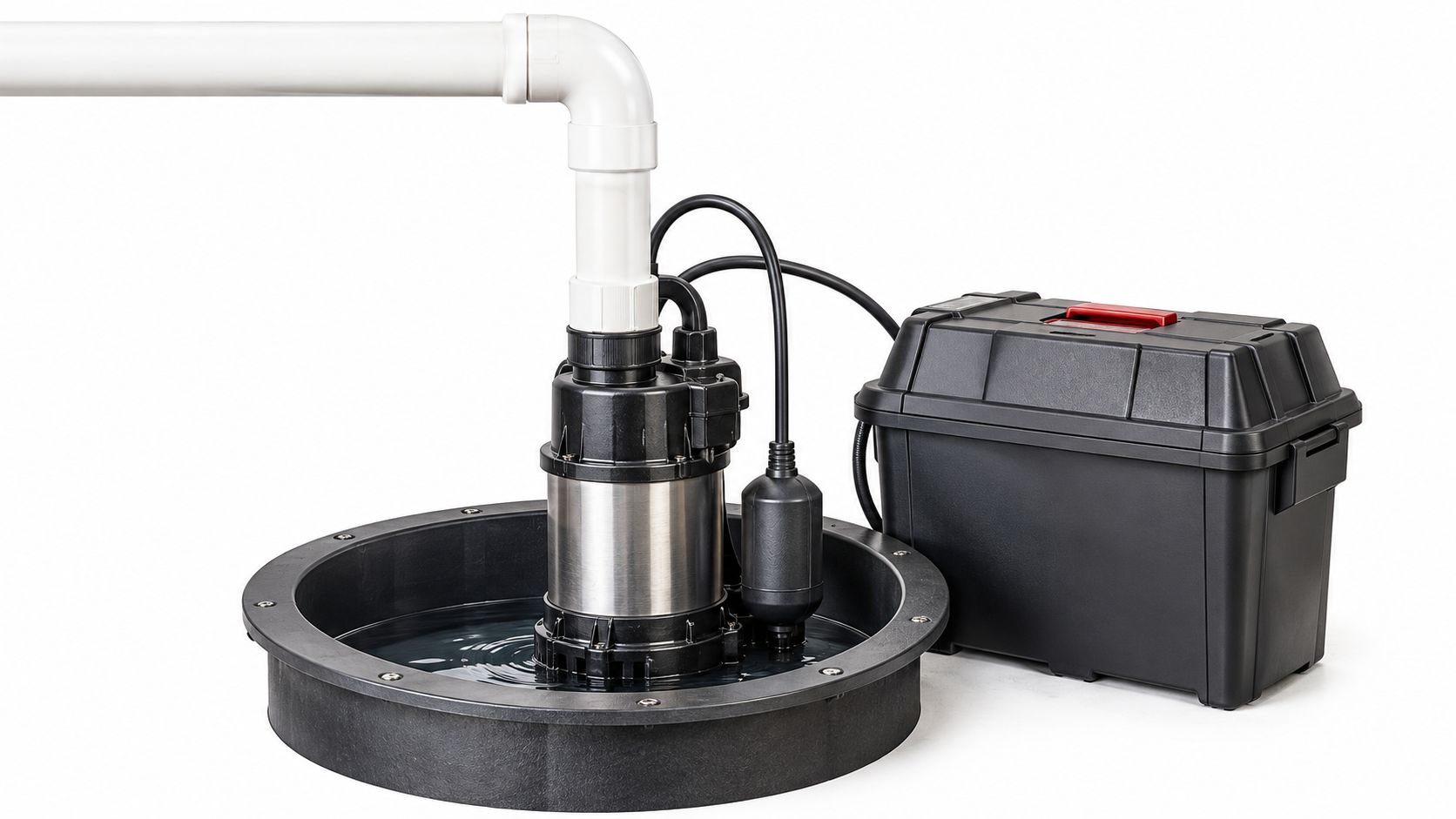
Say the water table rises under a 1970s rental and the primary pump is on utility power. The outage hits at 9 p.m. The battery pump carries the basin, the alarm texts the on-call tech, and the boiler stays above the water. Without the battery, you're on a shop vac at midnight.
5. Elevating and Protecting Critical Building Systems
Surface water and a failed storm line find the equipment you left on the slab. Panels, boilers, domestic heaters, generators, and data racks on the floor are how a wet Tuesday becomes a week without heat or elevators.
California's Central Valley Flood Protection Plan Update describes more than 1,600 miles of State-Federal levees, breached or overtopped more than 70 times since 1983. Since 2007, about 361 miles of urban levees have been repaired, rehabilitated, or improved. Large defences still get overtopped when the event beats the design. A mechanical room at grade has the same problem at building scale.
Dutch practice and New York work after Hurricane Sandy in 2012 point the same way. Put life-safety power, electrical service, and heat above the water you expect, or set them on a sealed plinth with a documented height.
Do it when you replace the gear
- Start with the design flood elevation and the lowest entry, not a memory of the last storm.
- Move electrical service and heating first. Life safety and heat beat a relocated data closet.
- Time the lift with a planned replacement. A new boiler on a raised pad costs less than moving one mid-life.
- Keep as-built elevations. The next manager needs the number, not a story.
Say the panel sits just above the parkade slab and the loading dock is the low point. During the capital year you set the replacement panel on a raised pad, seal the conduits, and mark the old location on the drawing. A dock shield can still fail. The building still has power.
6. Dry Floodproofing with Barriers and Sealing
Dry floodproofing keeps water out of a ground floor you can't easily raise. Sealed walls, gasketed doors, and removable shields at entries, parkade ramps, and utility openings.
The Government of Canada's Flood Risk Finder announcement separates coastal, rainfall, riverine, and combined flooding. As of 31 December 2025, only 11 of 131 flood-mapping projects underway had been posted to the Canada Flood Map Inventory, and only 64 projects included areas identified as high priority. You can't wait for a perfect map before you decide whether a shield is even the right tool.
Shields suit a river you can watch and a crew that can hang them inside the warning window. They're a poor fit for a cloudburst that peaks in minutes, and they fail if the wall leaks at the floor joint.
Watch a short deployment before you buy hardware nobody has practised with.
Before you order shields
Define the water level you're sealing to, and the minutes your staff have. Store the shields beside the opening, not in a cage across the site. Inspect gaskets every year and after any wetting. Check the floodplain bylaw. Some municipalities limit dry floodproofing on residential space and still allow it for commercial entries and parking.
Buildings on US rivers tie removable shields to gauge alerts. That works when someone is rostered to deploy them. A shield in storage during the flood is just metal.
7. Green Stormwater Infrastructure
Rain on your roof and lot is water you can still slow before it hits a drain that's already full.
Rain gardens, bioswales, green roofs, permeable pavement, and tree trenches hold water in soil and plants. Philadelphia's Green City, Clean Waters program and Copenhagen's cloudburst streets use that idea at city scale. On a multifamily site the useful version is smaller. Downspouts that discharge away from the wall, a rain garden that isn't a pond against the foundation, and permeable stalls that properly drain.
Soil has to infiltrate, and the water table can't sit in the basin. If a perc test fails, the garden becomes a wet pocket and you've moved the flood closer to the building. Use native, deep-rooted plants that take both wet weeks and dry ones. Pretty annuals won't.
Maintenance is the measure
- Clear inlets and outlets each spring and after leaf drop.
- Pull sediment before the basin turns into a bathtub.
- Check municipal credit programs before you design. A stormwater fee credit can pay for a bed you were going to build anyway.
A missed gutter size dumps the whole roof on one corner. Avoid common gutter sizing mistakes before you spend on a garden that never sees the water.
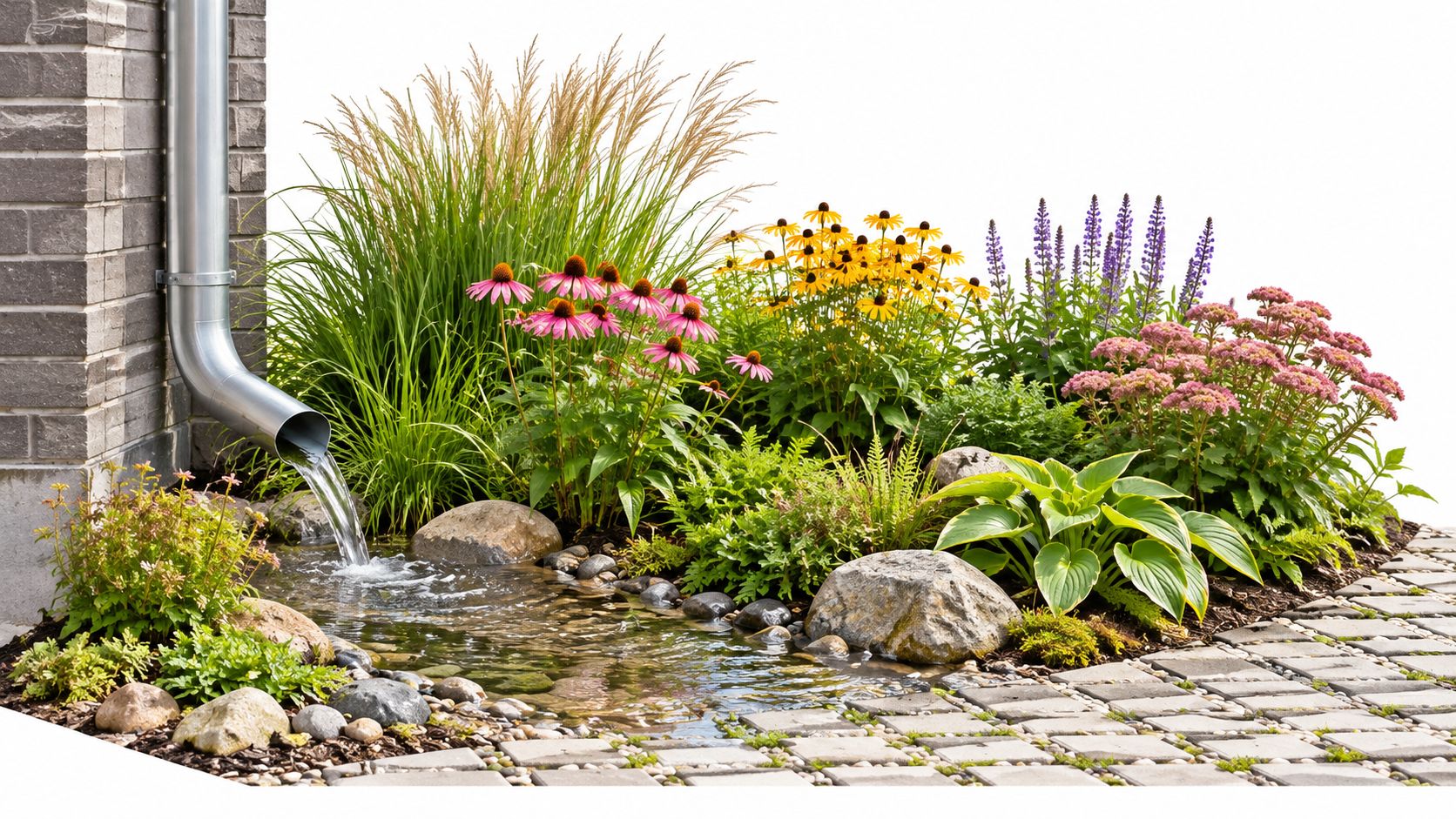
Say the west leaders dump at the foundation and the parkade stair floods every August. You extend the downspouts, cut a shallow bioswale to the lawn, and keep an overflow to the storm line. Peak flow drops. You still need the backwater valve, because the sewer can surcharge from the rest of the block.
8. Flood Risk Planning, Emergency Response, and Resilient Design Standards
A flood response starts with the water's route. A roof leak, a sewer backup, groundwater, and surface water at an entrance require different equipment and different actions. Map the likely source first, then assign someone to respond.
Statistics Canada reported that in 2023 about 673,600 Canadian households, or 4% of households, said their homes faced a very high or moderately high risk of flooding, according to its note on spring flood risk. A 2023 national study in Risk Analysis identified flood-exposure and social-vulnerability hotspots across 410 census tracts in 21 metropolitan areas and eight provinces, affecting about 1.7 million people. Insurers are also seeing rising water-damage claims.
Insurance does not prevent flooding. Standard policies may exclude overland flooding, while sewer-backup coverage may be optional. Coverage can also be unavailable or unaffordable for buildings at high risk. Detection, shutoff, backflow protection, inspections, and a written response plan can limit damage even when they cannot remove the hazard. Include lower-cost operational measures in plans for affordable and student housing, where major structural retrofits may not be practical.
A plan you can actually run
- Overhead and inside the building: Map roof drainage, plumbing, and water-heating equipment. Set a response for leaks and water detected in high-risk areas.
- Municipal sewer: Identify low drains and entrances that could be affected by backup. Assign who responds if the sewer surcharges.
- Groundwater: Record below-grade areas and the equipment that needs to remain protected. Include pump checks in the building's maintenance schedule.
- Surface flooding from outside: Mark the lowest doors, windows, and other openings. Compare them with available flood information, and note what the maps do not show.
- The building's own systems: List shutoff points, alarms, and critical utility locations. Name who watches alerts and who can act on them.
Write tenant notices in the languages spoken in the building. Tabletop the response once a year: who closes the valve, who deploys a barrier, who contacts the insurer, and how residents receive updates. Fold planned retrofits into capital work, and keep the code file. Conservation authority rules and floodplain ordinances can affect permits.
Add water system monitoring to the maintenance calendar alongside valve and pump checks. Assign a person to review alerts and consumption data, and make sure someone else can cover that role.
How the eight flood prevention strategies compare
Item
Best for
Main hazard addressed
Key limitation
Smart Water Leak and Flood Detection Sensors
Early leak detection in high-risk areas
Hidden leaks and abnormal water use
Only detects issues in monitored locations; needs power, connectivity, and response
Automatic Water Shut-Off Valves
Automatically stopping water supply during a leak
Ongoing water release from leaks or overflows
Requires plumbing work, testing, and can interrupt water service
Backwater Valves and Sewer Backflow Prevention
Buildings at risk of sewer or stormwater backup
Sewage and stormwater flowing back through drains
Can clog and does not stop water entering through exterior openings
Sump Pumps and Battery Backup Systems
Keeping basements and other below-grade spaces dry
Groundwater and accumulated water during heavy rain
Requires maintenance; backup batteries have limited runtime
Elevating and Protecting Critical Building Systems
Protecting essential equipment in flood-prone buildings
Flood damage to electrical, mechanical, and data systems
Retrofitting can be costly and disruptive
Dry Floodproofing with Barriers and Sealing
Sealing building openings against floods up to a defined level
Floodwater entering through doors, windows, and penetrations
Requires timely deployment and may not withstand prolonged flooding or excess water pressure
Green Stormwater Infrastructure
Managing rainfall on-site and reducing runoff
Peak stormwater flows and sewer overload
Needs suitable space and ongoing maintenance; may be exceeded in extreme rainfall
Flood Risk Planning, Emergency Response, and Resilient Design Standards
Coordinating preparedness, response, and compliant construction
Flood exposure, delayed response, and unsafe development
Plans need regular updates and practice; rules and maps may vary or lag changing risks
Building a Flood Prevention Plan You Can Actually Run
Don't buy the whole catalogue in month one. Sequence the work so the cheap layers reveal the building before you spend capital.
In the first week, walk every stack and mark the lowest floor, the parkade drains, the mechanical room, and every water heater. Confirm who gets alerts after 6 p.m. and on weekends, and put that name in writing. Test one shutoff valve and one sump the same week. If the valve doesn't close or the pump doesn't start, that is your first work order.
Next, add automatic shutoff on the main or the worst floors, and book the backwater valve before the rainy season, not after the first surcharge. If you don't have a valve, start the permit. Check sump capacity and the battery date on that same visit. Those two devices fail, and they fail on the same night.
Elevation, shields, and green infrastructure belong on the capital calendar. Raise electrical and heating gear when you replace it. Buy shields only if you have a crew and a real warning window. Fix gutters and grading before you plant a rain garden. A bed downstream of a bad downspout doesn't change the flood.
I would review the set twice a year, with the same seriousness as the fire-alarm test. Sensors, valve exercise, pump test, valve cleaning, gasket check, and a short tabletop. Write down what failed.
Layers beat any single device. A sensor without a shutoff watches the flood. A shutoff without a sensor waits for someone who is asleep. A backwater valve doesn't pump groundwater. A pump doesn't stop sewage. A shield doesn't help if nobody is rostered to hang it. An excluded peril doesn't rebuild the week you lose.
For buildings we meter, leak and flood detection sensors go in with the installation at no extra cost, including under sinks, near water heaters, and in mechanical rooms. Owners get an immediate alert and can check status from a phone. A water meter alone won't see every leak. Sensors at the wet spots, plus a watch on unexpected continuous flow, cover more of the building than either one alone. That's the inside-the-building layer. It doesn't replace the sewer valve, the pump, or the plan.
Axis Meter Solutions provides turnkey water submetering for multifamily, condominium, mixed-use, and commercial buildings in Canada and the United States, and every installation includes leak and flood detection with immediate alerts when water shows up where it shouldn't. If you want that monitoring on the same system as unit water measurement, start with the rooms where a supply leak would hit the most suites. Visit Axis Meter Solutions to see how a metered building can add that layer without a separate sensor project.
Ready to Optimize Your Utility Management?
Tell us about the property, utility, number of units, and your billing or monitoring goals. We'll help you identify the right next step.
Book a Call