IBC Tote Pump Selection and Safety Guide
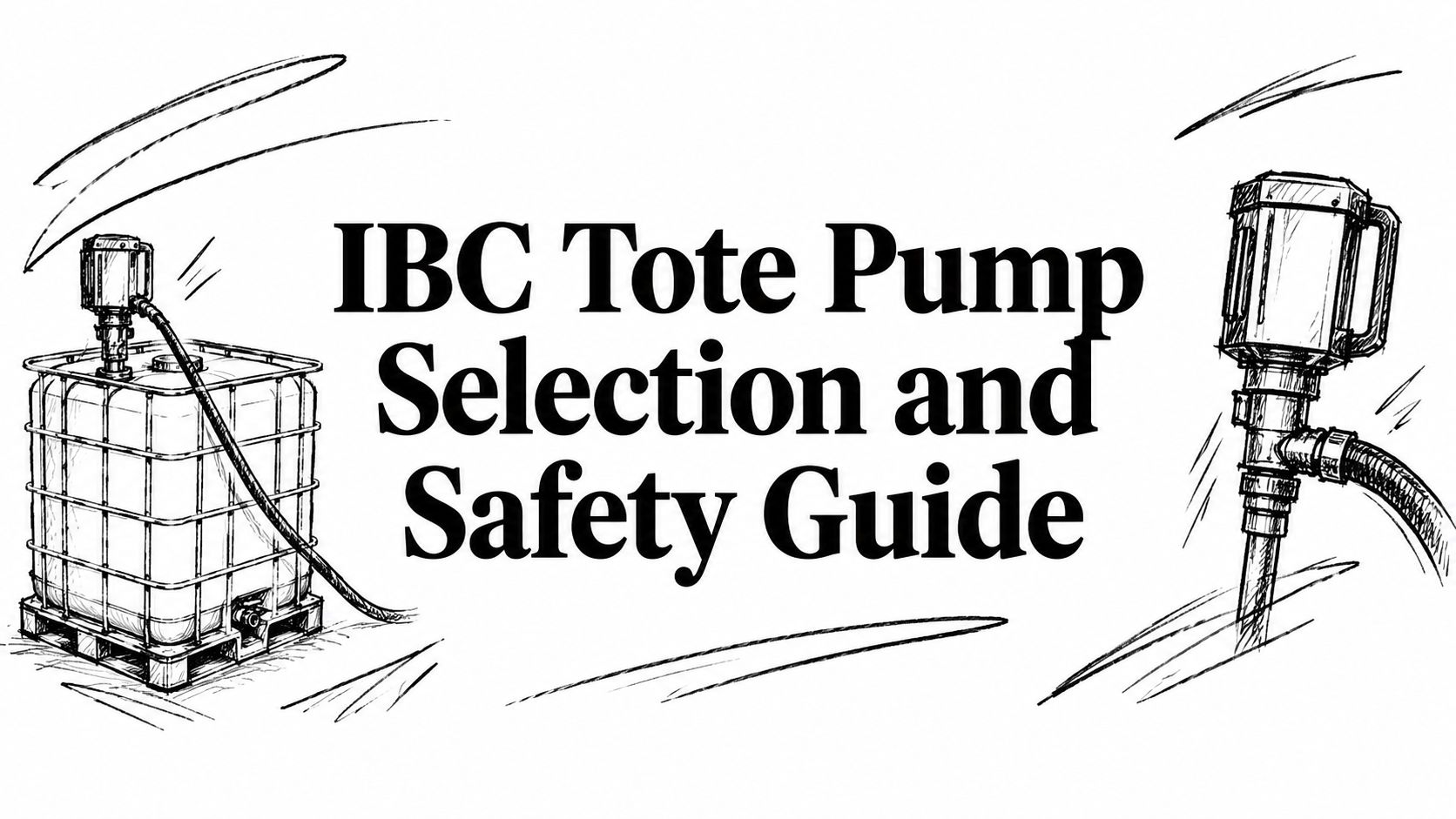
A maintenance technician is standing beside an IBC tote in a mechanical room, trying to transfer treatment chemical into a dosing system before tenants notice another service interruption. The tote valve is awkward to reach, the hose connection doesn't quite match, and the team is debating whether gravity flow will be “good enough.” That decision can turn a routine transfer into a spill, a dosing error, or an unsafe setup.
An IBC tote pump should be treated as part of the building's chemical-handling system, not as a disposable accessory. The right selection depends on the product, tote outlet, required flow, pump materials, electrical environment, containment, grounding, and Canadian regulatory obligations. A pump that works well for water may be entirely unsuitable for a solvent, corrosive treatment product, or viscous heating additive.
Table of Contents
- Understanding IBC Tote Pumps in Facility Management
- Pump Technologies and Material Compatibility
- Sizing Your Pump for Flow Rate and Viscosity
- Navigating Canadian Safety and Transport Regulations
- Installation, Containment, and Static Control
- Maintenance Routines and Troubleshooting Common Issues
- Finalizing Your Purchasing Decision
Understanding IBC Tote Pumps in Facility Management
In a commercial or multi-family property, an IBC tote often sits near a mechanical room, loading area, water-treatment plant, janitorial store, or maintenance workshop. It may contain a treatment chemical, cleaning concentrate, heating-system additive, or another product that must be moved into a smaller vessel or metered into equipment. The facility team needs a repeatable transfer method, not an improvised siphon assembled during an urgent callout.
An IBC tote pump connects to the tote's bottom discharge and moves liquid through a hose, valve, or dosing arrangement. Depending on the application, it can support bulk transfer, controlled dispensing, or connection to a process system. The pump also helps keep operators away from open containers and reduces the temptation to lift, tip, or manually manipulate a heavy tote.
In Canada, an IBC is formally an Intermediate Bulk Container. Transport Canada defines it as a rigid or flexible portable means of containment with a capacity of no more than 3,000 litres, while excluding bags, boxes, drums, and jerricans. The definition focuses on containers designed for mechanical handling, which matters because the tote, pump, hose, valve, and handling method need to work as one system. The Canadian dangerous-goods requirements for IBCs also address design, manufacture, permitted dangerous-goods classes, packing instructions, registration, inspection, and leak testing.
Why gravity flow is rarely enough
Gravity can appear attractive because it doesn't require a motor or electrical connection. In practice, it gives operators limited control over the transfer rate and may stop working reliably as the liquid level falls. A siphon can also lose prime, discharge unexpectedly, or leave an operator standing beside an open or poorly supported hose.
A properly specified pump gives the maintenance team a defined connection point and a controllable route to the receiving vessel. That makes it easier to include a shutoff valve, spill tray, emergency stop arrangement, and a documented operating procedure. It also supports more consistent dosing, which is important when excess chemical can damage equipment or create a tenant-safety concern.
Practical rule: If staff need to hold a hose by hand while watching an uncontained discharge, the transfer arrangement hasn't been properly designed.
Before ordering equipment, identify the tote contents and review the product's SDS. Confirm the outlet type, the desired transfer method, the receiving equipment, and the location where the pump will operate. Teams that need to compare container formats can browse IBC tote and drum options before finalising the tote and pump arrangement.
Pump Technologies and Material Compatibility
No single pump technology suits every IBC application. The best choice depends on viscosity, chemical behaviour, flow demand, control requirements, and the hazards created by the drive system.
Pump Type
Best For
Key Advantage
Limitation
Centrifugal
High-volume transfer of low-viscosity liquids
Smooth transfer and straightforward operation
Less suitable for viscous products or careful metering
Diaphragm
Corrosive, viscous, or chemically demanding products
Handles difficult fluids and can provide controlled movement
Pulsating flow and more components to inspect
Pneumatic diaphragm
Flammable or potentially ignition-sensitive products
Air drive can reduce electrical ignition concerns
Requires a suitable compressed-air supply and careful air control
Centrifugal pumps
A centrifugal pump is usually the practical option for moving a relatively thin liquid quickly between compatible containers or systems. It can work well for water-like products and some low-viscosity maintenance chemicals, provided the seals, housing, impeller, hose, and fittings are rated for the actual product.
The trade-off is control. A centrifugal pump may deliver more flow than a dosing task needs, and throttling it with an unsuitable valve can create operating problems. It also depends on appropriate priming and suction conditions. If the tote outlet, hose, or inlet arrangement restricts flow, the pump may run noisily or lose performance.
Diaphragm and pneumatic pumps
A diaphragm pump is often a better fit for corrosive or viscous products because the liquid is moved through a chamber using a flexible diaphragm rather than relying on a high-speed rotating impeller. Pneumatic versions are particularly useful where the product is flammable or where the facility wants to limit electrical equipment near the transfer point.
That doesn't make a pneumatic pump automatically safe. The entire arrangement still needs suitable grounding, compatible conductive connections where required, correct ventilation, and controls that prevent uncontrolled discharge. Compressed air can also create a different maintenance burden, including regulator, filter, hose, and air-valve checks.
Materials decide whether the pump survives
The tote itself is often made from HDPE, but HDPE compatibility doesn't validate the complete pump assembly. The product may attack the pump housing, diaphragm, shaft seal, gasket, hose liner, or connection material even when it appears safe inside the tote.
Request a compatibility review based on the actual product concentration, operating temperature, and exposure duration. Materials such as PTFE, Viton, polypropylene, stainless steel, and other specialised compounds may be appropriate for particular products, but the correct selection must come from the product SDS and the pump manufacturer's compatibility information. Don't approve a material package based only on a catalogue phrase such as “chemical resistant.”
For motor-driven installations, review not just the pump body but the motor, controls, enclosure, cable route, and location classification. A variable-frequency drive may help regulate a suitable motor-driven pump, but it adds commissioning and lifecycle responsibilities. Guidance on VFD pump lifecycle care is useful when the facility is considering variable-speed operation rather than a basic fixed-speed arrangement.
The valve is part of the compatibility decision too. Plastic ball valves can be effective in suitable chemical-service applications, but their body, seats, threads, and operating temperature must match the product and installation. Review plastic ball valve selection considerations alongside the pump and hose specification, not as a separate purchasing exercise.
Sizing Your Pump for Flow Rate and Viscosity
Pump sizing starts with the job the facility needs to complete. “The largest pump available” isn't a specification. Oversizing can cause splashing, difficult shutoff, excessive shear, inaccurate dosing, and unnecessary energy use. Undersizing can leave staff waiting, overheat the motor, or fail to move a thick product through the required hose run.
Start with the liquid
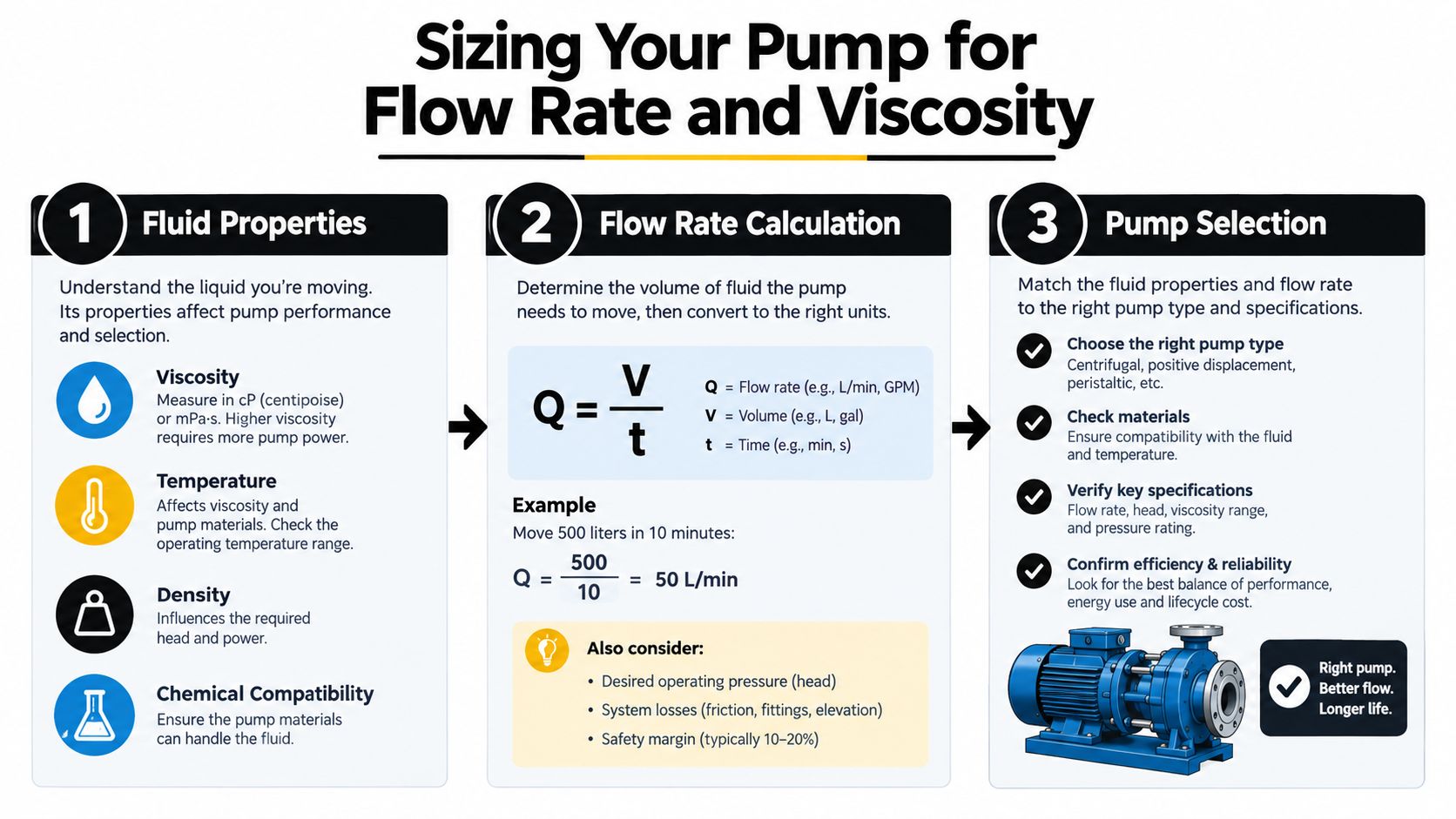
Record the product name, concentration, temperature range, viscosity, foaming behaviour, and any solids or suspended material. The SDS should be the starting point for chemical hazards, while the supplier should confirm viscosity and compatibility information where the SDS doesn't provide enough detail.
A thin water-treatment liquid may suit a centrifugal pump. A thicker flocculant, concentrated cleaner, or winter-grade heating additive may need a positive-displacement or diaphragm arrangement. A product that changes viscosity with temperature can require different operating assumptions in a cold loading area than in a heated mechanical room.
Calculate the required flow
Use a simple operating calculation:
- Define the transfer volume. Establish how much liquid must move during a normal task.
- Define the available transfer window. Consider the time staff can reasonably spend supervising the operation.
- Calculate the target flow. Divide the required volume by the available operating time.
- Add the system restrictions. Include hose length, elevation, valves, filters, fittings, and the tote's outlet geometry.
- Check the pump curve. Confirm that the pump can deliver the target flow at the required total head, not only at a free-discharge condition.
The result should be a practical operating range rather than a single catalogue maximum. If the pump's rated performance assumes a short hose and open discharge, it may not meet the requirement once connected to a restrictive valve or high‑dosing line.
Read the curve, then test the installation
Ask the supplier to identify the expected duty point on the pump curve. Check whether the pump will operate within its recommended range at the actual viscosity and temperature. For a metering task, prioritise controllability and repeatability over impressive free-flow performance.
A flow meter or differential-pressure instrument can help diagnose restrictions and confirm whether the system is behaving as designed. Teams evaluating measurement options can review this guide to a differential pressure transmitter for flow measurement, then confirm that the selected instrument is chemically and mechanically compatible.
Don't rely on pump size alone. Confirm the tote's bottom outlet, the adapter, the hose bore, the receiving connection, and the shutoff arrangement as a complete path. A small restriction at the outlet can affect a pump more than the marketing description suggests.
Navigating Canadian Safety and Transport Regulations
Canadian compliance begins with the product, not the pump catalogue. A tote containing a regulated dangerous good brings transport, container, labelling, inspection, and handling considerations into the purchasing decision. The pump is only one part of the transfer setup.
Transport Canada's IBC definition establishes a capacity limit of no more than 3,000 litres and distinguishes IBCs from other packaging types. For dangerous goods, a Canadian-manufactured UN-standardised IBC must comply with CAN/CGSB-43.146. An IBC manufactured outside Canada must meet Chapter 6.5 of the UN Recommendations on the Transport of Dangerous Goods and the manufacturing country's national rules. The applicable framework also covers the IBC design, manufacturing facility, permitted dangerous-goods classes, packing instructions, registration, leak testing, and periodic inspection. These requirements are set out in the Canadian Transportation of Dangerous Goods Regulations.
Flammable liquids change the installation
A pump suitable for water or a non-flammable janitorial product may be unacceptable for a Class I flammable liquid. Under Canada's Flammable Liquids Bulk Storage Regulations, outdoor pumps driven by non-explosion-proof motors or internal-combustion engines must be located at least 10 feet from a storage tank, loading or unloading rack or terminal, building, or other enclosure. Pumps for Class I flammable liquids must suit the liquid and be designed for the maximum working pressure to which they'll be exposed. The federal flammable-liquids rules also restrict the use of stationary internal-combustion engines and non-explosion-proof motors for operating Class I flammable-liquid pumps, subject to additional separation and ignition-control provisions where such equipment is necessary.
Those requirements affect layout, not just equipment selection. A property team may need to relocate the tote, choose a pneumatic drive, control ignition sources, improve ventilation, and establish a restricted transfer zone. The installer should assess the product classification and hazardous location before anyone approves a motor or extension cord.
Compliance checkpoint: Confirm the product classification, tote markings, pump drive, maximum working pressure, separation requirements, and operating procedure before the first transfer.
The building's internal handling process also needs ownership. Identify who checks the SDS, who confirms the tote inspection status, who connects the pump, who remains present during transfer, and who responds to a leak. A written procedure is especially important in multi-family properties where contractors, concierge staff, and maintenance personnel may all encounter the equipment.
Installation, Containment, and Static Control
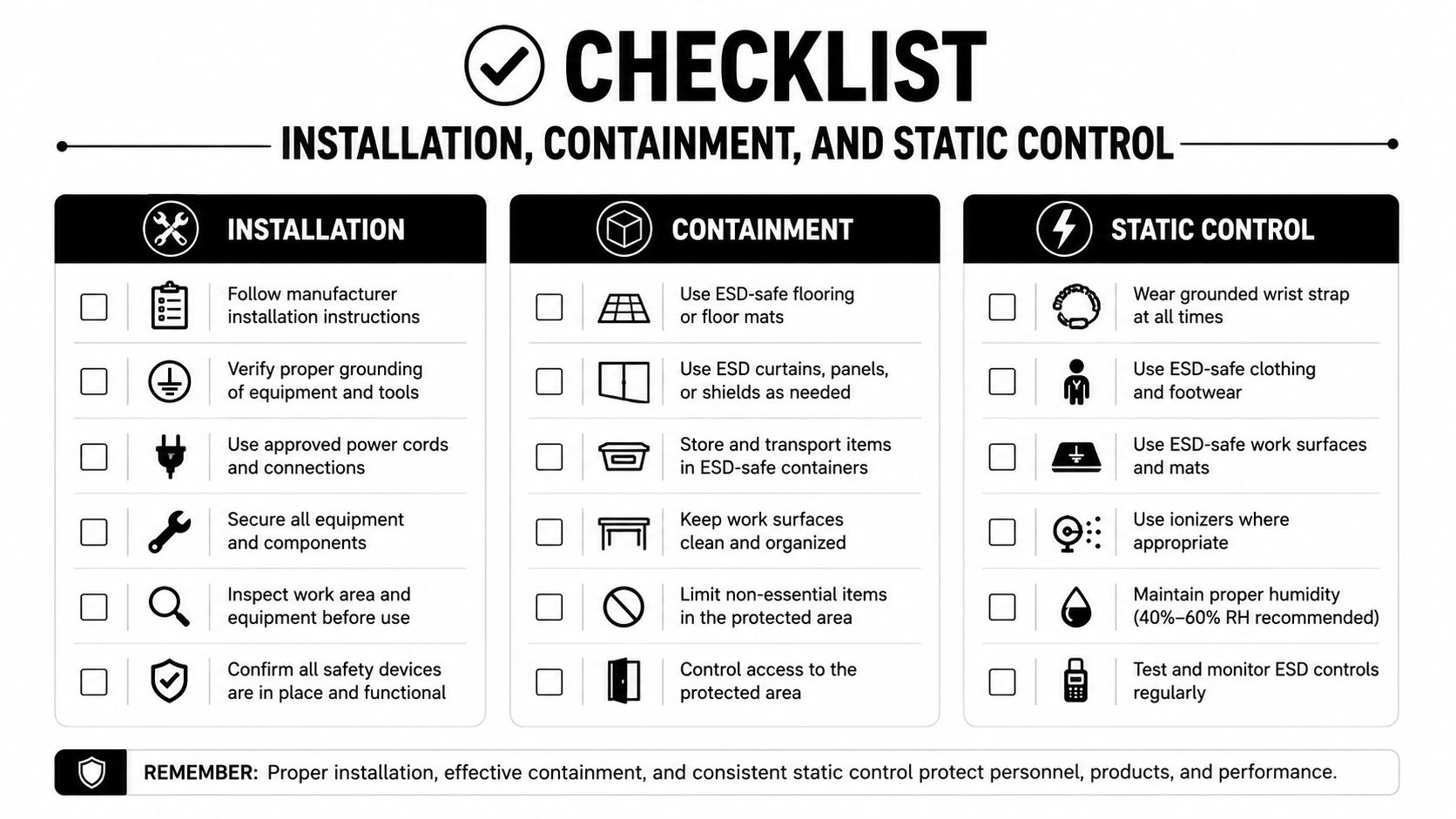
A good pump can still create a poor installation if the tote sits directly on a mechanical-room floor with a hose stretched across a walkway. Start with the physical arrangement. Position the tote where mechanical handling is practical, access to the bottom valve remains clear, and a failed connection won't send chemical toward drains, electrical equipment, lifts, or occupied areas.
Environment and Climate Change Canada's code of practice states that IBCs used for chemical dispensing should sit on or in an impermeable secondary-containment system. The Canadian chemical-sector code of practice also supports regular inspection of pumps, hoses, connecting devices, and containers for damage or leakage.
Build the connection from the tote outward
Many IBCs use a bottom discharge valve commonly associated with a 2-inch connection, but the actual tote fitting must be verified before ordering adapters. Match the valve to a camlock, threaded, or hose-barb adapter that suits the pump inlet and chemical service. Don't force mismatched threads together or rely on a clamp to compensate for an incorrect connection.
Use a short, supported connection at the tote where possible. A shutoff valve should be accessible without reaching over the hose or standing in a likely spill path. The hose should be rated for the product and pressure, secured against abrasion, and routed so staff won't trip over it or pull on the tote valve.
Control leaks before they become building damage
Secondary containment needs to suit the credible spill, not merely provide a visual tray under the valve. Check that the containment is impermeable to the product, stable under the tote load, accessible for inspection, and compatible with the way the tote is moved. Include a way to isolate the pump and stop transfer quickly.
A leak sensor near the containment area can provide an early warning, particularly where the tote is located near a boiler room, water-treatment equipment, or an unoccupied service corridor. A water alarm sensor for facility monitoring may not be suitable for every chemical, so confirm sensor compatibility before installation.
Bond and ground the transfer path
For flammable or static-sensitive liquids, the tote, pump, hose, and receiving vessel should be bonded and grounded before transfer. Flow should be controlled to limit static generation, and conductive connections should be maintained where the product and equipment design require them.
Don't assume that a plastic tote or hose can be made safe by attaching one ground wire to a convenient metal pipe. The responsible electrician or hazardous-materials specialist should determine the grounding and bonding method, confirm continuity where required, and assess ignition sources around the transfer point. The product's UN marking, hazard class, packing group, and retest status should also be checked when the tote is transported under Canada's dangerous-goods framework.
Maintenance Routines and Troubleshooting Common Issues
A pump that works on commissioning day can become unreliable after exposure to chemical vapour, temperature changes, dried product, vibration, or repeated hose movement. Maintenance should be simple enough for the site team to perform and specific enough that defects don't get dismissed as normal wear.
Before each transfer, inspect the tote, valve, adapter, hose, pump body, seals, and receiving connection. Look for swelling, cracks, abrasion, corrosion, crystallised residue, loose clamps, and signs of leakage. Confirm that the shutoff valve moves correctly and that the containment area is empty and ready to receive a release.
Use a practical inspection routine
- Before operation: Verify the SDS, product identity, connection fit, hose condition, containment, grounding requirements, and receiving-vessel capacity.
- During transfer: Watch for vibration, unusual noise, pulsation, odour, leakage, unexpected flow changes, and rising pressure.
- After transfer: Close the valve, isolate the pump, drain or recover residual product safely, and leave the hose secured.
- At service intervals: Inspect diaphragms, seals, couplings, motor components, air controls, and electrical equipment according to the manufacturer's instructions.
The code of practice cited above calls for regular inspection of pumps, hoses, connecting devices, and containers for damage or leakage. Where applicable, complete discharge of the IBC contents also forms part of responsible handling. Follow the product and equipment instructions before flushing, especially if water, solvent, or another cleaning medium could react with the chemical.
Diagnose the symptom, not just the pump
Loss of prime usually points to an air leak, an empty or poorly vented tote, an obstructed inlet, or an unsuitable suction arrangement. Stop the pump, isolate the system, inspect the connections, and verify that the product can reach the pump without excessive restriction.
Cavitation or rattling can indicate insufficient liquid supply, a blocked strainer, excessive suction lift, or a hose that collapses under vacuum. Continuing to run the pump can damage internal components and make the original restriction harder to identify.
Seal or diaphragm degradation may result from chemical incompatibility, temperature exposure, dry running, excessive pressure, or normal wear. Replace damaged parts with materials approved for the actual product. Changing only the visible seal without checking the hose, valve seat, and other wetted components can leave the underlying compatibility problem in place.
Stop-work condition: A chemical smell, visible leak, damaged hose, unexpected pressure rise, or failed grounding connection warrants isolation and assessment before the transfer continues.
Finalizing Your Purchasing Decision
The lowest purchase price rarely represents the lowest facility cost. A pump that needs improvised adapters, incompatible replacement seals, frequent manual intervention, or a separate containment retrofit can become an operational liability. Procurement should compare complete, serviceable assemblies rather than motor price alone.
Use this checklist when reviewing quotations:
- Product fit: Confirm the SDS, concentration, temperature, viscosity, hazard classification, and wetted materials.
- Tote connection: Verify the bottom valve, adapter type, hose size, shutoff valve, and coupling materials.
- Performance: Check the duty point, total head, flow-control method, and suitability for the required transfer task.
- Drive safety: Confirm motor suitability, pneumatic requirements, hazardous-location controls, and grounding provisions.
- Containment: Specify an impermeable secondary-containment system and a practical spill-response arrangement.
- Serviceability: Price compatible seals, diaphragms, hoses, couplings, and other wear parts before approving the pump.
- Documentation: Require installation instructions, compatibility information, inspection guidance, and operating procedures.
For a broader review of fittings, valves, containment components, and related tank accessories for industry use, use the facility's chemical inventory and layout as the filter. The useful accessory is the one that makes the transfer safer and easier to inspect, not the one that merely adds another connection.
Treat the IBC tote pump as a long-term facility asset. A properly specified assembly protects staff, building infrastructure, chemical quality, and operating continuity, while a rushed purchase shifts risk into every future transfer.
Axis Meter Solutions helps multi-family, condominium, mixed-use, and commercial properties improve operational visibility through utility submetering, leak detection, commissioning, billing, and ongoing service. If you're reviewing chemical-room risks alongside broader building monitoring needs, visit Axis Meter Solutions to discuss a practical programme for your property.
Ready to Optimize Your Utility Management?
Tell us about the property, utility, number of units, and your billing or monitoring goals. We'll help you identify the right next step.
Book a Call