Water Leak Detection Equipment: A Practical Guide
In Canada, 25% to 30% of drinking water can be lost or remain unaccounted for before it reaches users, and losses in some municipalities can reach 60%, representing an estimated $0.65 billion in annual economic loss according to the National Research Council's Canadian water-loss publication. A condo building doesn't need to lose water at that municipal scale to suffer the same operational consequences. One running toilet, failed supply line, or concealed riser leak can run unnoticed for weeks, inflate consumption, damage several suites, and turn a manageable repair into an insurance event.
Water leak detection equipment should therefore be specified as building infrastructure, not purchased as a collection of gadgets. The right system tells your team where water is escaping, how much is flowing, which units or zones are affected, and what must happen next. The wrong system sends an alert to a phone that nobody monitors at 2 a.m.
Table of Contents
- Why Water Leak Detection Equipment Matters for Property Owners
- The Core Categories of Water Leak Detection Equipment
- Comparing Sensors, Loggers, Correlators, and Pressure Monitors
- Automatic Shutoff Valves and the Post-Alert Response
- Choosing Equipment by Building Type and Risk Profile
- Installation, Commissioning, and Ongoing Maintenance
- Connecting Detection Data to Submetering and Cost Recovery
- A Practical Evaluation Checklist and Closing Recommendation
Why Water Leak Detection Equipment Matters for Property Owners
A leak rarely starts as a dramatic failure. In condo and rental buildings, it usually starts as a small, continuous loss that nobody sees until a resident reports a damp ceiling, warped flooring, or staining in a wall cavity. By that point, the cost is no longer just wasted water. It is drywall, flooring, contractor time, resident disruption, insurance paperwork, and a board asking why nobody saw it sooner.
That is why leak detection equipment should be treated as an operating control, not a convenience purchase.
At building scale, the core problem is delayed awareness. A single toilet can run for weeks. A failed connector under a sink can feed a slow leak into cabinetry and wall assemblies. A riser issue can affect multiple suites before anyone connects the complaints. Continuous monitoring changes that sequence. It turns a hidden loss into a timestamped record of abnormal flow, a location signal, and a clear starting point for response.
That record matters. Property teams need more than a push notification that arrives after hours and gets missed. They need evidence showing when abnormal use began, which line or suite was affected, who was notified, and whether anyone isolated the water. Without that chain, operators are stuck arguing from resident memory, incomplete maintenance notes, or a monthly meter read that arrives long after the damage is done.
The difference shows up most clearly at 2 a.m. An alert only has value if it triggers the next action. Can the team confirm whether water is still moving. Can they tell whether the event is likely a fixture issue, a branch line problem, or a broader building incident. Can they shut water off before one leak becomes restoration work across several units. Owners should judge equipment by that post-alert outcome, not by sensor sensitivity alone.
Water damage is also one of the clearest property-risk issues in the sector. According to PCL's Canadian construction-industry discussion of water-damage prevention, which cites Insurance Bureau of Canada data, insured losses from severe weather and related events exceeded $3.1 billion in 2023, nearly 60% of real-estate claims were water-related, and water leaks accounted for 95% of property damage claims in condominium buildings. For property owners, those numbers point to a simple conclusion. Waiting for visible damage is an expensive operating model.
Owners who want practical guidance on how to detect a leak early should focus on systems that connect detection, escalation, shutoff, and usage records. That is what prevents the familiar mess after an overnight alert. It also gives operators something just as valuable after the repair is done: defensible data for resident conversations, contractor follow-up, and billing disputes when abnormal consumption has to be traced back to a specific suite or event.
The Core Categories of Water Leak Detection Equipment
Treat the equipment as a layered stack. No single device can reliably identify every failure in a multi-family building, because a puddle under a sink, a concealed riser leak, and a slowly running toilet produce different signals.
Point or presence sensors
These sensors detect water at a specific physical location. Install them under sinks, beside water heaters, in mechanical rooms, near pumps, beneath laundry equipment, and inside drain pans. They're excellent at confirming that water has reached a high-risk area.
Their limitation is equally important. A point sensor can't detect a leak that hasn't reached its floor, pan, or contact points. It also won't tell you how much water is moving through an inaccessible pipe unless it connects to another measurement layer.
Flow loggers and connected meters
A flow logger records water movement through a supply line or meter. It can identify unusual continuous use, overnight consumption, or a sustained flow pattern that points to a running toilet, dripping fixture, or hidden leak. A suitable water leak detection sensor overview helps distinguish fixture-level sensing from broader consumption monitoring.
Flow data provides coverage beyond the exact placement of a point sensor, but it can be ambiguous. Occupancy, irrigation, cleaning, and legitimate high-use periods can resemble a leak. The system needs baselines, timestamps, and zone or suite identification to make the alert useful.
Acoustic correlators and listening devices
Acoustic equipment listens for vibration or pressure signatures created by water escaping from pressurized piping. It suits buried services, concealed distribution runs, slabs, and inaccessible pipework where a visual sensor would be ineffective.
Acoustic tools require access to the pipe network and skilled interpretation. Building noise, pumps, traffic, and construction can interfere with readings. These devices help locate a suspected hidden leak, but they aren't a substitute for continuous building monitoring.
Pressure monitors
Pressure monitors identify abnormal drops, instability, or sustained changes in a pressurized system. They can support diagnosis of concealed failures and help confirm that a line isn't holding pressure as expected.
Pressure data can be difficult to interpret in buildings with changing demand, pressure-reducing equipment, booster systems, or multiple zones. It works best when paired with flow information and an understanding of normal operating conditions.
Automatic shutoff valves
A shutoff valve interrupts water supply after a configured alert or a command from an operator. It can sit at a fixture, serve a riser or zone, or protect the entire building at the main.
A valve is not a detector. It needs a reliable trigger, a defined closure policy, manual override, and a plan for restoring service. Buying a valve without designing the post-alert workflow just moves the unresolved problem downstream.
Comparing Sensors, Loggers, Correlators, and Pressure Monitors
A property operator should choose equipment based on the failure it needs to catch, not the most impressive specification sheet. Point sensors catch consequences at known locations. Flow and pressure monitoring identify abnormal system behaviour. Acoustic tools investigate hidden losses that other equipment may only indicate.
Detection technologies at a glance
Technology
Detects
Typical location
Best for
Key limitation
Point or presence sensor
Water reaching a monitored surface
Under sinks, mechanical rooms, drain pans, laundry areas
Localized escape of water and flood-risk areas
Misses leaks that don't reach the sensor
Flow logger
Continuous, abnormal, or unexpected water movement
Main, riser, zone, or suite meter
Running toilets, sustained use, hidden leaks, consumption analysis
Normal high use can look like a leak
Acoustic correlator or listening device
Vibration and sound from pressurized escaping water
Buried services, slabs, concealed pipe runs
Locating hidden or underground leaks
Requires access, quiet conditions, and trained interpretation
Pressure monitor
Abnormal pressure drops or instability
Pressurized zones, pump rooms, supply systems
Confirming system anomalies and supporting diagnosis
Readings vary with demand and system design
Why a combination works better
A point sensor may alert when water reaches a mechanical-room floor. A flow logger may identify abnormal use before that happens. An acoustic investigation can then locate the failure inside a concealed line. Each device addresses a different stage of the event.
The California Energy Commission evaluated continuous acoustic monitoring and satellite-based detection for subsurface leaks that ordinary inspection would have missed. The evaluated leaks represented an estimated 57 million to 170 million gallons of avoidable water loss and 140 to 419 megawatt-hours of embedded energy, according to the commission's water-leakage reduction project. That evidence supports a layered design, with acoustic or pressure-based monitoring for concealed distribution and local water-presence sensors where physical damage is the primary concern.
Design principle: Use flow to identify abnormal behaviour, point sensors to confirm local water, and acoustic or pressure tools to investigate what the building can't see.
A small walk-up may need suite-level flow monitoring and targeted sensors. A tower with extensive concealed piping may justify zone-level pressure data, acoustic investigation capability, and automated isolation. The correct answer depends on coverage gaps, not on buying every available technology.
Automatic Shutoff Valves and the Post-Alert Response
The most important question isn't whether a sensor can detect water. It's what happens after the alert.
Suppose a sensor reports water in a third-floor laundry room at 2 a.m. The system should identify the location, notify the right people, determine whether flow is still active, and close the appropriate valve if the event meets the configured criteria. It should also record the alert, the response, the valve state, and the restoration of service.
Match the valve to the risk
A local valve can isolate a fixture or appliance without interrupting an entire building. That makes sense for equipment such as a water heater or laundry connection, where the affected outlet is clear and the consequence of isolation is limited.
A zone-level valve serves a riser, floor, or defined plumbing area. It provides stronger containment for a concealed failure while avoiding a building-wide outage. The design must identify which suites and common areas depend on the zone, and it must give staff a clear way to communicate the interruption.
A main shutoff protects the whole building, but it carries the greatest operational consequence. Natural Resources Canada recommends flood alarms connected to the main water-supply shutoff valve as a home-resilience measure in its guidance on protecting homes. In a multi-family property, that principle needs careful zoning and escalation rather than automatic closure for every low-confidence alert.
Specify the failure behaviour
Ask vendors how the system behaves when power, connectivity, or the control signal fails. Require a manual override, a documented valve position, local status indication, and a recovery process after closure. A battery-powered sensor that sends an alert but cannot communicate reliably through a concrete structure is not an adequate system.
The equipment must also address false closures. A valve that shuts the building during legitimate overnight demand can create resident complaints, equipment risks, and emergency callouts. Use thresholds that combine location, flow, duration, and confirmation where possible. A practical discussion of remotely controlled valve hardware, including an electric ball valve, can help teams evaluate the mechanical component separately from the alert software.
Insurance recognition shouldn't be assumed. Detection equipment may have limited value to an insurer if nobody monitors alerts, testing isn't documented, or the valve doesn't cover the required outlets. Treat the alarm, shutoff, response roster, and maintenance records as one controlled system.
Choosing Equipment by Building Type and Risk Profile
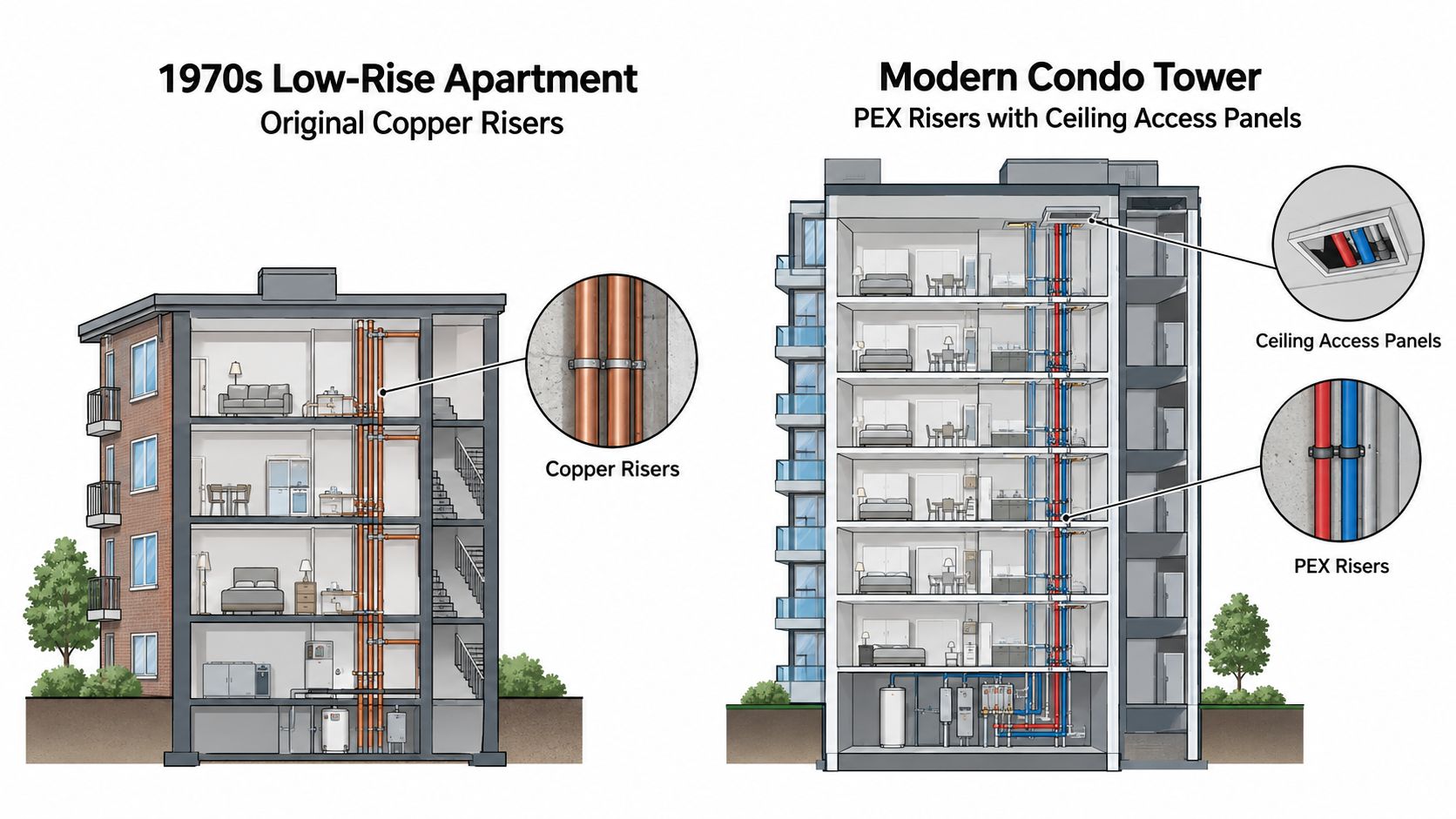
Start with the building, not the catalogue. A system for a 1970s low-rise with original copper risers shouldn't be specified the same way as a new tower with accessible PEX distribution and planned ceiling panels.
Build the shortlist around consequences
For an older low-rise, prioritise riser monitoring, mechanical-room point sensors, pressure checks, and an investigation plan for concealed piping. Original materials, limited access, and undocumented modifications create coverage problems that a few under-sink sensors won't solve.
A new condo tower may support more deliberate zoning. Specify suite or floor flow data, sensors at high-risk appliances and mechanical spaces, and valves that correspond to risers or defined zones. Make sure ceiling access panels, communications coverage, and electrical provisions support service rather than forcing technicians to work around finished construction.
Mixed-use properties need separation between residential, retail, and common-area demand. Retail tenants may have legitimate high-use periods, special equipment, or independent operating hours. Their flow baseline shouldn't be compared with residential suites, and an alert in a commercial kitchen may require a different response from an alert beneath a residential sink.
A small eight-unit walk-up may not need a complex central architecture, but it still needs accountable monitoring. A property manager should know who receives an alert, who can access the building, who can close the water, and how residents are notified.
Ask these questions before approving a purchase
- High-consequence zones: Which rooms, risers, suites, and appliances could cause the most damage?
- Alert ownership: Who responds at 2 a.m., and what happens if that person doesn't acknowledge the alert?
- Isolation scope: Will the valve close a fixture, zone, riser, or main?
- Communications: Does the system continue to report when internet, power, or a gateway fails?
- Insurer requirements: Does the carrier recognise this equipment, and what testing records or outlet coverage does it require?
- Data access: Can managers review timestamps, flow history, alert status, and repair outcomes?
- Coverage gaps: Which failures remain invisible after installation?
Don't buy the most sensitive sensor and call the building protected. Buy the architecture that covers the highest-consequence failures and gives staff a credible response path.
Installation, Commissioning, and Ongoing Maintenance
A water leak detection project fails more often through weak commissioning than through poor hardware. Sensors end up in the wrong location, valves aren't labelled, alert recipients change jobs, and nobody records what normal flow looks like. The building then owns equipment without owning a working response system.
Treat commissioning as a handover
Installation should document each sensor, meter, valve, gateway, and monitored zone. Record the physical location, device identifier, communications path, normal operating state, and the person responsible for escalation. Test the actual alert route, not just the sensor in isolation.
Acoustic correlators need access to relevant pipe runs and conditions that allow technicians to distinguish leak signals from background noise. Pressure monitors need to be interpreted against the building's pumps, regulators, isolation valves, and normal demand cycles. Flow loggers need a usable baseline, otherwise the first alert will be either too sensitive or too vague.
The provider and building team should agree on:
- Access planning: Schedule suite, ceiling, mechanical-room, and riser access with minimal resident disruption.
- Valve testing: Confirm closure, reopening, manual override, and local status.
- Alert escalation: Test notifications to staff, contractors, and backup contacts.
- Record keeping: Store commissioning results, device maps, firmware records, and maintenance history.
- Insurance evidence: Keep documentation that shows coverage, testing, monitoring, and response procedures.
Ongoing service is part of the specification
Batteries need replacement. Sensors need testing. Gateways need connectivity checks. Firmware changes can affect operation. Flow equipment may need calibration or verification, and valves can seize if they aren't exercised.
A turnkey programme can coordinate equipment, installation, commissioning, monitoring, maintenance, and reporting. A fragmented purchase leaves the building team responsible for deciding which vendor owns a failed alert, a dead gateway, or a disputed consumption record.
Property teams that already manage multiple alarm systems can check your alarm system with this guide as a useful reminder that testing schedules, contact lists, and documented response procedures matter as much as installation. The same discipline belongs in water monitoring.
Connecting Detection Data to Submetering and Cost Recovery
Leak detection and submetering should share data wherever possible. A flow anomaly that identifies continuous overnight consumption can also show which suite, zone, or common area is responsible. That gives the manager a factual basis for inspection, resident communication, and billing review.
The distinction matters. A point sensor can confirm water at a location, while a meter can show the volume and duration of use. Together, the records can separate a leaking toilet from a building-wide demand change and help staff explain why a charge changed.
Use the data operationally
A connected programme should provide:
- Timestamped alerts: Establish when abnormal use began and when staff were notified.
- Unit or zone identification: Direct maintenance to the right location instead of inspecting the whole building.
- Repair verification: Confirm that flow returned to a normal pattern after the work.
- Billing support: Use consumption records to investigate disputed or unexpected charges.
- Claim documentation: Preserve an auditable sequence for insurers, restoration contractors, and warranty discussions.
Remote access is central to this workflow. A discussion of water meters with remote reading is relevant because managers need more than a periodic reading. They need usable consumption history and timely access when a resident reports a problem.
Track programme costs against avoided damage, recovered or correctly allocated water charges, reduced investigation time, and fewer billing disputes. Don't promise an insurance discount. Quebec reporting says some insurers offer discounts of up to 10% to 15% for leak-detector adoption, while requirements can include a minimum number of detectors per supervised outlet, as described by Insurance Portal's report on smart flow meters. Confirm the carrier's requirements before treating any premium reduction as part of the financial case.
A Practical Evaluation Checklist and Closing Recommendation
Take these questions into every vendor meeting:
- Coverage: Which suites, risers, mechanical rooms, appliances, and common areas are monitored?
- Detection: Does the system use point sensors, flow, pressure, acoustic investigation, or a deliberate combination?
- Response: Who receives the alert, who acknowledges it, and who can attend overnight?
- Shutoff: Can the system isolate a fixture, zone, riser, or main with manual override?
- Resilience: What happens during power, connectivity, sensor, or gateway failure?
- Data: Can the platform connect alerts with submetering, billing, and repair records?
- Maintenance: Who replaces batteries, tests valves, updates firmware, and validates communications?
- Insurance: What documentation and outlet coverage does the insurer require?
My recommendation is direct: specify layered water leak detection equipment as connected infrastructure. Use point sensors where water damage begins, flow and pressure monitoring where abnormal behaviour matters, acoustic tools for concealed investigations, and automatic shutoff only with a tested response procedure. A managed submetering programme can make that architecture easier to operate because measurement, alerts, billing, and maintenance stay connected.
For multi-family and mixed-use buildings, leak detection is becoming a baseline expectation for disciplined property operations, not a premium add-on. Start with a risk map, define the 2 a.m. response, and reject any proposal that treats the sensor as the complete solution.
Axis Meter Solutions delivers turnkey submetering for multi-family, condominium, mixed-use, and commercial properties, with water metering, leak and flood detection, tenant billing, commissioning, and ongoing service coordinated as one programme. Visit Axis Meter Solutions to discuss a building-specific approach that connects abnormal-use alerts with accurate consumption data and accountable maintenance.
Ready to Optimize Your Utility Management?
Tell us about the property, utility, number of units, and your billing or monitoring goals. We'll help you identify the right next step.
Book a Call