Sight Flow Indicator Guide: Types, Sizing, and Installation

If you've ever walked into a mechanical room and found a pump running, a valve open, and nobody quite sure whether liquid is moving, you already know why a sight flow indicator earns its space on a pipe. It gives you an immediate visual answer, no software login, no waiting for a trend screen, just a direct check on whether the line is behaving the way it should.
In Canadian facilities, that matters because flow confirmation is often tied to cooling, heating, and water distribution reliability. It also matters because the actual failure is not just losing visibility, it's missing the early warning signs of a leak, a crack, or a blocked line until downtime starts.
Table of Contents
- Purpose of Sight Flow Indicators in Facility Monitoring
- Common Types of Sight Flow Indicators
- Material Construction and Durability Factors
- Sizing and Installation Guidelines
- Compatibility with HVAC and Water Systems
- Comparing Sight Flow Indicators with Electronic Sensors
- Troubleshooting Common Issues and Failures
- Maintenance and Inspection Best Practices
- Practical Applications in Building Utility Management
Purpose of Sight Flow Indicators in Facility Monitoring
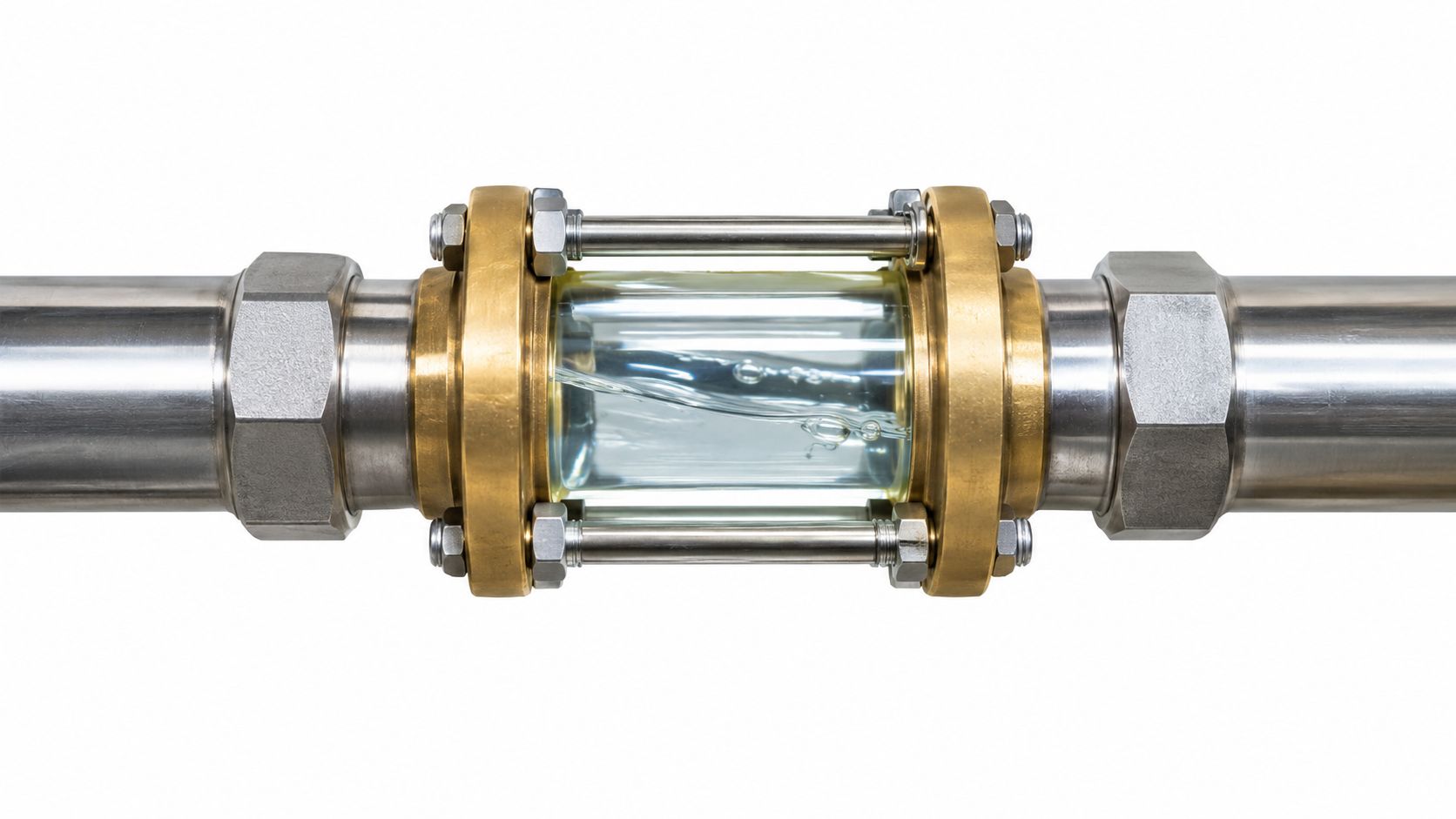
A sight flow indicator is a simple monitoring device that lets maintenance staff confirm fluid movement at a glance. It doesn't replace a flow meter, but it does answer the first question that usually matters during an inspection, is there flow or isn't there.
That makes it useful in HVAC chillers, cooling towers, water loops, and transfer lines where a quick visual check can catch trouble before a system drifts out of balance. It also works without power or data integration, which is why it still shows up in plants that already have building management systems and remote alarms.
Why operators still rely on a visual check
A remote sensor can be healthy while the pipe is fouled, air-locked, or not carrying the flow you expected. A sight glass lets the technician see what's happening in the line itself, which is often the fastest way to confirm a commissioning issue or a pump problem.
Practical rule: if the process depends on confirmed circulation, give the operator a way to verify it locally, not just through a screen.
That's why a good maintenance program treats the indicator as a verification point, not a decorative window. If you want a broader view of how visual checks fit into plant oversight, the top 10 facility management tips resource is a useful complement, especially when you're tying routine inspections to system reliability.
For building operators who track utility performance, visual flow confirmation also supports the logic behind water system monitoring. If the line is supposed to be active, the indicator should make that obvious before anyone starts chasing alarms or opening access panels.
Common Types of Sight Flow Indicators
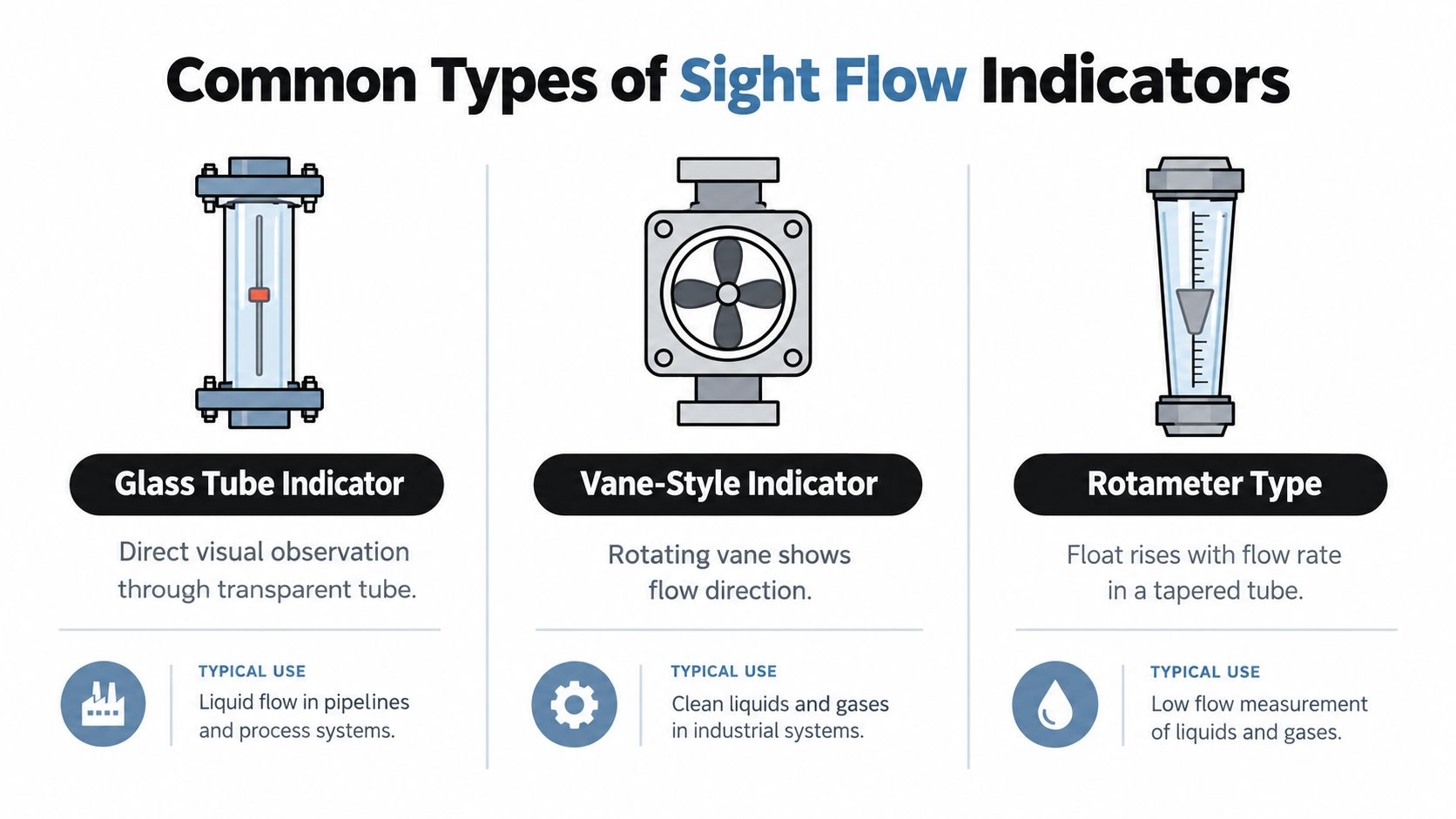
The right design depends on what you need to see, how aggressive the fluid is, and how much access you have for inspection. In practice, the options break down into three common families, and each one solves a slightly different visibility problem.
Glass tube indicators
A glass tube indicator gives direct viewing through a transparent section, so the operator can see liquid movement without guessing. It works well when the fluid is clean enough to read clearly and the line layout allows for easy visual access.
Its main strength is simplicity. Its weakness is also obvious, if the medium carries debris, coats the window, or changes appearance under temperature, the view gets unreliable fast.
Vane-style indicators
A vane-style design uses a moving element, usually a flap or rotor, to show that flow is present. That makes it more readable in partially opaque services where a plain transparent window can be difficult to interpret.
These are useful when the operator needs a clear yes-or-no signal rather than a detailed look at the fluid condition. They're less useful if you need to inspect clarity, entrained air, or contamination.
Rotameter type
A rotameter-style indicator adds a visible moving float or rotor to show relative flow behaviour. It's often chosen where low-flow visibility matters and where a plain glass window would be too subtle to read from a distance.
This style can help with intermittent or light-duty lines, but it still needs proper matching to the service conditions. If the pipe diameter, media, or mounting position is wrong, the reading becomes more of a guess than a check.
For a basic compare-and-select approach, flow meter liquid guidance helps frame where direct visual confirmation ends and measurement begins.
Material Construction and Durability Factors
Material choice decides whether the indicator survives the system or becomes the next maintenance job. In treated water, stainless steel bodies tend to hold up better against corrosion than lighter-duty materials, especially when the piping is exposed to repeated cleaning or variable water chemistry.
Body, window, and seal choices
The viewing surface is where many failures start. Glass is usually preferred where clarity and scratch resistance matter, while acrylic can be easier to handle in less demanding service but is more vulnerable to wear and thermal stress.
Seal selection matters just as much. EPDM and PTFE each change how the assembly behaves under heat, chemical exposure, and repeated service cycling. If the wrong seal is used, the indicator can look fine on the outside while the leak starts at the gasket line.
The body may survive the pipe run. The seal usually tells you first when the service condition is too harsh.
Quick material comparison
Material
Best For
Limitations
Stainless steel body
Treated water, corrosive environments, longer service life
Higher cost, still needs compatible seals and window material
Brass fittings
Lower-pressure applications and simpler water services
Less suitable where corrosion resistance or harsher conditions are needed
Glass viewing window
Clear visual inspection, better scratch resistance
Can crack or fail under impact, over-tightening, or severe thermal stress
Acrylic viewing window
Lighter-duty service and easier handling
More prone to scratching and heat-related degradation
EPDM gasket
General water service and many HVAC applications
Not universal for all chemicals
PTFE gasket
Broader chemical resistance and more demanding service
Needs correct installation and attention to compression
The point isn't to choose the most expensive part. It's to match the construction to the actual fluid, temperature, and maintenance rhythm in the plant.
Sizing and Installation Guidelines
Sizing starts with the pipe and ends with the inspection route. If the indicator is too small, the reading is hard to trust. If it's installed where nobody can see it without removing guards or crawling around adjacent pipework, it won't get checked when it should.
Start with access and pipe geometry
Pick a location that lets staff inspect the window without contorting around elbows, hangers, or insulation. The best position is usually where flow is stable and the line is easy to reach during routine rounds.
Avoid mounting where vibration is high or where turbulent flow makes the visual signal jumpy. A sight flow indicator is only helpful if the reading you see reflects the line, not the last pipe bend upstream.
Install it so it can survive service
Threads need to be clean, gaskets need the correct material, and fasteners need even tightening. Over-torquing is a common way to crack a viewing window or stress the body, especially when crews treat a transparent section like a heavy steel spool.
A simple sequence works best:
- Confirm orientation so the indicator matches the flow direction.
- Inspect mating surfaces for burrs, damage, or debris.
- Select the right gasket for the fluid and temperature.
- Tighten evenly to avoid point loading the window.
- Check for leaks under operating pressure before putting the line back into service.
A technician wearing gloves and using the right wrench matters more than a rushed fit-up. The small details usually decide whether the indicator becomes a reliable inspection point or a recurring leak.
Compatibility with HVAC and Water Systems
In HVAC and water systems, compatibility is less about appearance and more about whether the device fits the way the loop runs. Chilled water, hot water, and glycol blends all place different demands on the indicator body, seals, and window material.
Variable-flow systems add another wrinkle. The flow can look calm during one part of the day and lively during another, so the indicator needs to remain readable across that operating range rather than at one perfect condition.
Where visual confirmation helps most
On chilled water circuits, a sight flow indicator is useful for confirming circulation through branches, coils, and bypass sections. On hot water lines, it helps spot dead legs and local stagnation. In glycol services, it can confirm whether the loop is moving when the pump is running and whether the apparent flow matches the expected operating state.
That's also why it fits alongside other building systems instead of replacing them. If your team already works with ventilation specialists such as Diamond AC & Heating ventilation experts, a sight flow indicator is one more practical checkpoint that helps verify the hydronic side of the job, not just the air side.
What to verify before installation
- Pressure rating: Make sure the indicator can tolerate the line conditions without being the weak point.
- Temperature range: Check the full service range, not just the nominal operating point.
- Fluid compatibility: Confirm the seal and window materials suit the loop chemistry.
- Service access: Make sure insulation, valves, and adjacent fittings won't block inspection.
In larger utility programs, a sight flow indicator can also support leak detection strategy by showing whether a line is flowing when it shouldn't be, or not flowing when it should. That visual cue works best when paired with a broader monitoring plan rather than used in isolation.
Comparing Sight Flow Indicators with Electronic Sensors
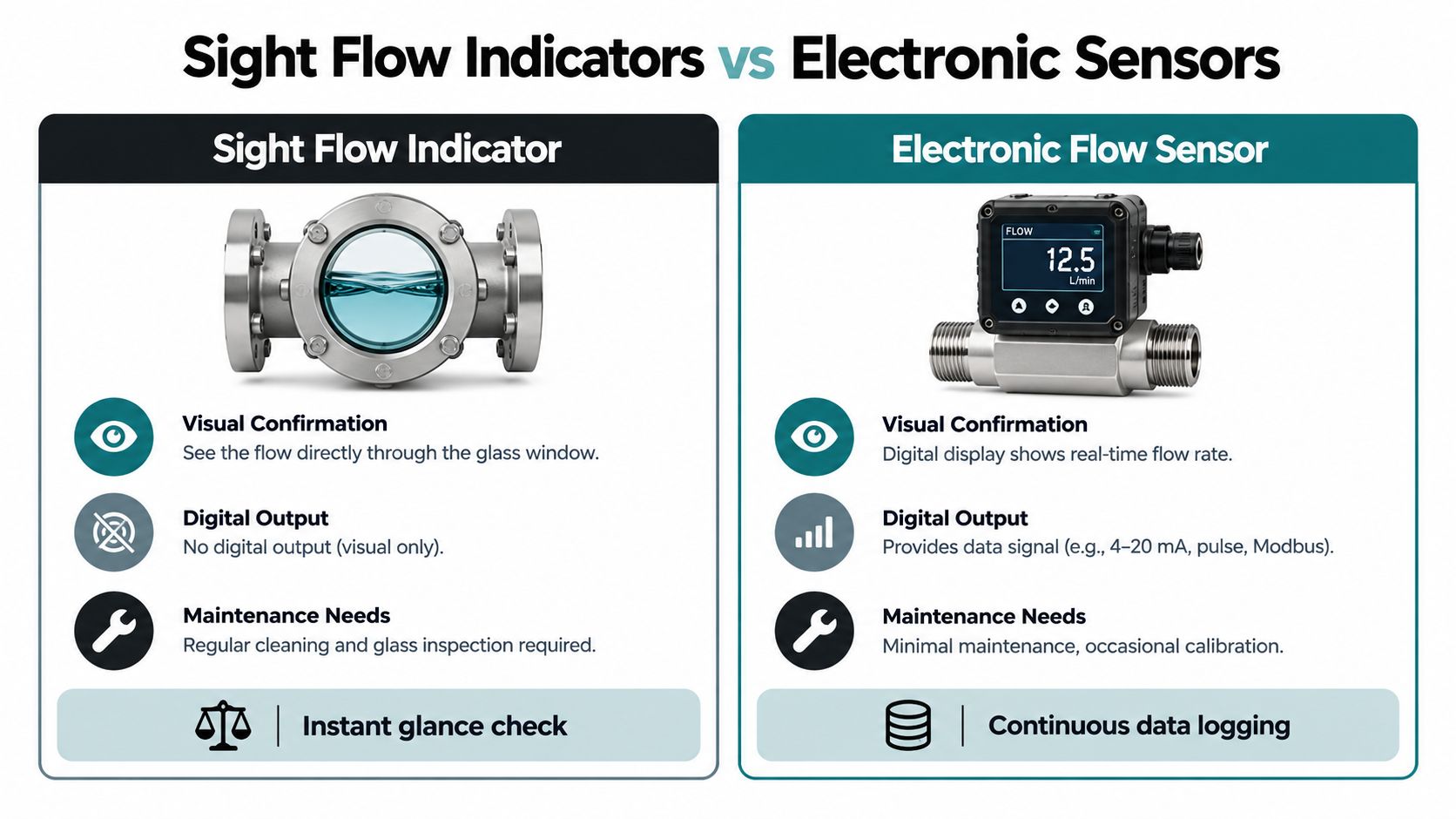
A sight flow indicator and an electronic sensor solve related but different problems. The indicator gives immediate visual confirmation. The sensor gives data output, alarms, and integration options.
For day-to-day plant work, the question is not which one is better in theory. It's which one answers the operational question fast enough for the people who have to act on it.
Where visual devices win
A sight flow indicator is useful when the operator needs a quick sanity check, a commissioning confirmation, or a backup when a digital system is offline. It also stays readable during local inspection rounds without needing calibration software or a power supply.
Where sensors make more sense
Electronic sensors are stronger when you need continuous data, reporting, or automated response. In multi-unit or regulated environments, that kind of output can support billing, logging, and alerts in ways a visual device can't.
If you're comparing them in a recirculation or plant support loop, JMJ Plumbing commercial service is a useful reference point for understanding how practical circulation work is handled in the field. The choice often comes down to whether you need a simple field check or a recorded signal.
water flow sensors are the natural next step when you need the broader automation side. The cleanest approach in many buildings is layered, a visual indicator for instant confirmation, and a sensor where the control system needs the numbers.
Trade-off summary: instant glance check versus continuous data logging.
Troubleshooting Common Issues and Failures
When a sight flow indicator starts giving bad information, the problem is usually visible before it becomes catastrophic. Clouded glass, scratched windows, gasket leaks, and corrosion all point to different failure modes, and each one calls for a different response.
The first question is whether the indicator is lying or the process is wrong. If the window is dirty but the line is healthy, cleaning may solve it. If the window is damaged or the seal has started to leak, the unit should come out of service.
Manufacturer guidance commonly calls for periodic inspection, often every three months, and warns that even small glass damage, gasket leaks, or corrosion can require immediate shutdown and replacement, according to the Ernst Instruments manual. That's the right mindset for Canadian plants too, because the cost of waiting is rarely just a fogged window.
A fast diagnostic sequence
- Check visibility first. If the window is scratched, cloudy, or coated, don't trust the readout until it's cleaned or replaced.
- Look for seal leakage. Any wetness at the joint usually means the gasket or mating surface needs attention.
- Watch the flow pattern. Intermittent movement can point to air entrainment, pump issues, or a bad installation location.
- Compare against the system. If the indicator shows no flow but the pump is running, verify the upstream and downstream isolation points before tearing the indicator out.
If the glass is damaged, treat it as a safety issue, not a cosmetic one.
A good technician doesn't just replace the part that looks suspicious. They ask whether the failure came from vibration, incorrect tightening, incompatible fluid, or a service condition that the indicator was never suited for in the first place.
Maintenance and Inspection Best Practices
The best maintenance program for a sight flow indicator is boring in the best possible way. It's regular, documented, and strict about replacement when the part stops being trustworthy.
Quarterly inspection is a practical baseline for many systems, and harsher services deserve closer attention. In aggressive chemical or high-stress applications, the inspection interval should tighten based on how quickly seals, windows, and moving elements show wear.
What to check every time
- Window clarity: Look for staining, clouding, scratches, or fracture lines.
- Seal integrity: Check for seepage, dampness, or residue at the joints.
- Moving parts: On vane or rotor types, confirm the element moves freely under normal flow.
- Body condition: Watch for corrosion, pitting, or thread damage.
- Mounting security: Make sure fasteners and supports haven't loosened.
Replace, don't nurse it along
A sight flow indicator is not the place to stretch service life past reason. If the glass is compromised, if the gasket has started to leak, or if corrosion is attacking the body, replacement is usually the safer choice than a repair patch.
For inventory planning, keep spare windows, seals, and at least one complete replacement on hand for critical loops. That avoids improvisation when a failed unit forces a shutdown and the plant needs the line back in service quickly.
Documentation helps too. A short inspection record that notes date, condition, and action taken gives facilities teams a reliable history instead of guesswork at the next outage. Over time, that log shows which loops are easy to maintain and which ones are chewing through parts too fast.
Practical Applications in Building Utility Management
A sight flow indicator matters most when it helps a building team make a faster, cleaner decision about a utility system. In a multi-tenant property, that might mean confirming that a submetered loop is circulating before someone starts chasing a billing complaint or a comfort issue.
In a recirculation setup, a quick visual check can also reveal whether a pump is moving water the way it should, or whether the branch line is stagnant while everyone assumes it's active. That's especially useful during tenant turnover, seasonal changeovers, and maintenance windows when systems are temporarily rebalanced.
For owners and managers, the value is practical, not abstract. A visible flow check can flag abnormal behaviour early, which reduces the risk of wasting water, missing a failed pump, or letting a small leak turn into damage. It also helps field staff separate real circulation problems from metering or communication issues.
Axis Meter Solutions offers utility submetering programs that combine metering equipment, installation, commissioning, tenant billing, and ongoing service, including leak and flood detection in water installations. In that kind of program, a sight flow indicator works as a supporting field check, especially when the team needs quick confirmation that a line is active before escalating the issue.
The point is simple. Visual confirmation doesn't replace measurement, but it does keep operators from making expensive decisions in the dark.
If you want help choosing a sight flow indicator for HVAC, water, or utility service, Axis Meter Solutions can support the broader monitoring picture with metering, leak detection, and ongoing service under one programme. Visit Axis Meter Solutions to see how a practical submetering setup can fit alongside the flow verification points your team already uses.
Ready to Optimize Your Utility Management?
Tell us about the property, utility, number of units, and your billing or monitoring goals. We'll help you identify the right next step.
Book a Call